
Oil Quality Sensor
An oil quality sensor measures the condition of oil in place, continuously, instead of waiting for the next sample to come back from the lab. PE Energy supplies the Des-Case Oil Quality Sensor 2 range for industrial gearboxes, hydraulic systems and circulating oil systems: the in-line sensor itself, the standalone display and data logger, and the cables and conversion leads needed to commission them.
Related condition monitoring categories: contamination monitoring sensors, moisture content sensors, compact laser particle counters, portable laser particle counters, and the full condition monitoring range.
What does an oil quality sensor measure?
An oil quality sensor reads the condition of the oil itself, not just its level or pressure. The Des-Case Oil Quality Sensor 2 continuously measures contamination, moisture, temperature and degradation, so early changes show up between scheduled oil samples rather than after them.
What that buys you is expressed directly on the display: the OQD-S-1 Oil Quality Display calculates and shows oil life remaining in days from the current oil condition. It logs at five-minute intervals with a real-time clock and a ten-year battery backup, which means a drain interval argument can be settled against a trend line rather than a calendar.
What do I need to order to install an oil quality sensor?
A working installation is normally three items, not one: the sensor, a cable, and either a display or a connection into an existing control system. Ordering the sensor alone is the most common reason a commissioning visit stalls.
| Part | What it is |
|---|---|
| OQS2-01-A-V | The sensor. 1/2 inch BSPP male thread, RS485, 4-20 mA, CAN bus and Modbus outputs. |
| OQD-S-1 | Standalone display with data logger. Reads oil condition and temperature with no PC attached. |
| OQC2-A-02 / OQC2-A-10 | Sensor power and data cable. |
| OQC2-B-10 | Sensor to display cable, 10 metre run. |
| OQC2-C-02 | Display power and data cable, 6.5 ft / 2 m. |
| OQC2-CON-A / OQC2-CON-B | Conversion cable, Oil Quality Sensor 2 to Gen 1 connection. |
| OQC2-USB-01 | Configuration cable, USB to RS485. Needed to set the sensor up from a laptop. |
The two conversion cables are the detail worth catching before you order. If a Gen 1 sensor is already installed and you are replacing only the head, the OQC2-CON-A or OQC2-CON-B lead lets the new Oil Quality Sensor 2 land on the existing Gen 1 connection instead of forcing a rewire of the run.
Will the sensor fit my gearbox or reservoir, and what does it need electrically?
The mechanical and electrical requirements are modest, which is why these sensors go into existing assets rather than only new builds. The published data on our own product page for the OQS2-01-A-V is the specification to check against your port and panel.
| Specification | OQS2-01-A-V sensor | OQD-S-1 display |
|---|---|---|
| Material | Stainless steel, AISI304 | Heat resistant polycarbonate |
| Weight | 0.4 lb (180 g) | 0.66 lb (300 g) |
| Process connection | 1/2 inch BSPP male, 32 mm AF hex collar, 25 Nm torque | Not applicable |
| Electrical connector | 6 pin Bulgin 4000 series | Not applicable |
| Power supply | 9 to 30 V DC, 0.4 W average | 9 to 30 V DC, 0.4 W average, 200 mA continuous |
| Outputs | RS485, 4-20 mA, CAN bus, Modbus | 1 x 4-20 mA analog, 1 x RS485 at 9600 baud to sensor, 1 x RS485 at 115200 baud from display |
| Ingress protection | Not published on the data sheet | IP67 when connected |
Two consequences fall out of that table. The 25 Nm collar torque and 32 mm hex mean this is a hand-tool installation into an existing 1/2 inch BSPP port, not a machining job. And because the display is IP67 once connected and made from heat resistant polycarbonate, it does not need a dry cabinet, so the reading can sit at the machine where the operator is rather than in a control room.
Is an oil quality sensor the same as a particle counter or a moisture sensor?
No. An oil quality sensor tracks the overall condition of the fluid, including degradation, while a particle counter reports solid contamination by size band and a moisture sensor reports water content specifically. They answer different questions and are frequently deployed together.
PE Energy carries all three as separate lines, which is the practical way to scope a monitoring program: contamination monitoring sensors for particulate, moisture content sensors for water ingress, and compact or portable laser particle counters where an ISO cleanliness code is required for reporting. Start with the failure mode you have actually seen in that asset, then add the sensor that detects it.
Need help specifying an oil quality sensor?
Tell us the asset, the port size available, the oil in service and whether the reading needs to reach a PLC or stay local at the machine, and our team will confirm the sensor, cable and display combination, along with pricing and lead time. Request a quote and we will respond promptly.
Showing all 10 results
-
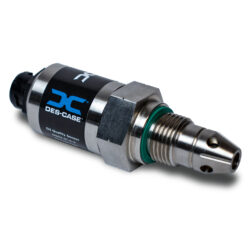
Des-Case OQC2-A-02 Oil Quality Sensor
$95.73Oil Quality Sensor 2 - power data cable 6.5ft/ 2m The Oil Quality Sensor offers real-time monitoring of oil condition, providing invaluable insights into the health and longevity of your machinery. With its advanced technology, the sensor continuously measures parameters like contamination, moisture, temperature, and degradation, allowing you to detect early signs of potential issues. This proactive approach enables users to prevent unexpected equipment downtime, reduce maintenance costs, and optimize oil change intervals. Compact and easy to install, the Oil Quality Sensor integrates seamlessly into a variety of industrial applications, ensuring your operations run smoothly and efficiently. Choose the Oil Quality Sensor for smarter, more reliable lubrication management. Specifications GENERAL Ordering Code: OQS2-01-A-V PHYSICAL Material: Stainless Steel: AISI304 Weight: 0.4 lb (180 g) Connection: 32mm AF Hex Collar Torque: 25Nm Connection Thread: 1/2’’ BSPP male CONNECTIONS Connector: 6 pin Bulgin 4000 series ELECTRICAL Power Supply: 9-30 V DC Consumption: 0.4W Average DATA OUTPUT Digital Output: RS485, CANbus Protocols Supported: Modbus, CanOpen and J1939 Analog Output: 4-20mA OIL QUALITY DETECTION PARAMETERS Frequency: Every 2 seconds Output: Oil Condition, Oil Temperature (°F or °C) Sensitivity / Accuracy: 0.01%, +/-0.5% Elements: All wear and contamination OIL TYPE Configuration: Any mineral, semi-synthetic or synthetic oil, including fuels (diesel & bio-diesel) ENVIRONMENTAL Fluid Pressure: up to 70 bar (1015 psi) Operating Temperature: -40°F to 248°F (-40°C to +120°C) Calibrated Temperature: -4°F to 248°F (-20°C to +120°C) Fluid Temperature: -40°F to 248°F (-40°C to +120°C) Storage Temperature: -67°F to 302°F (-55°C to +150°C) STANDARDS & CERTIFICATIONS Water & Dust: IP68 when connected Shock & Vibration: BS EN 60068-2-30 (Test Db – Cyc.Hum.) BS EN 60068-2-6 (Test Fc – Sine Vib.) BS EN 60068-2-27 (Test Ea – Mech.Shock) EMC: EN 61000-6-4:2007 (Generic Emissions Standard for Industrial Environments) EN 61000-6-2:2005 (Generic Immunity Standard for Industrial Environments) Conformity: CE Marked, RoHS Compliant Features How it works The sensor is a live, highly flexible and cost effective condition based monitoring solution, designed to be permanently mounted within any lubrication system on any type of machine. Over 60 times more sensitive to oil contamination than any other dielectric constant measuring sensor, it provides real-time monitoring of oil condition, water ingress and oxidation levels. Benefits Reduced maintenance costs Extended oil change intervals Scheduled downtime intervals for increased productivity Reduced waste oil cost Improved equipment reliability Low cost investment tool Reduced carbon foot print Reduces total cost of ownership OQD The Oil Quality Display (OQD) is designed to elevate performance and deliver more insightful data, enhanced connectivity, detailed diagnostics and a streamlined user 1. Wi-Fi Connectivity Fast, smart access through wi-fi by scanning a QR code on the unity or connecting via a local network, ensuring quicker, more intuitive management. 2. Oil Life Monitoring Precise and accurate calculation in days of “Oil Life Remaining” based on current oil condition. This provides increasingly accurate data, helping users plan maintenance with confidence. 3. LED Alerts Fast responses to critical issues with improved oil status indication. A green color indicates oil quality is good, red indicates to check the condition of the oil and a flashing red light signals an alert condition, urging faster action. 4. Expanded Event Codes More data for better control with 22 event codes. Users gain deeper insights into system diagnostics and oil conditions, ensuring more precise troubleshooting and monitoring. TDS Featured in our podcast Hear how this product solves real-world reliability problems in our episode How DES-CASE Oil Quality Sensors Prevent Industrial Gearbox Failure. Or listen on RSS.com. -
Des-Case OQC2-A-10 Oil Quality Sensor
$166.13Oil Quality Sensor 2 - power data cable 6.5ft/ 2m The Oil Quality Sensor offers real-time monitoring of oil condition, providing invaluable insights into the health and longevity of your machinery. With its advanced technology, the sensor continuously measures parameters like contamination, moisture, temperature, and degradation, allowing you to detect early signs of potential issues. This proactive approach enables users to prevent unexpected equipment downtime, reduce maintenance costs, and optimize oil change intervals. Compact and easy to install, the Oil Quality Sensor integrates seamlessly into a variety of industrial applications, ensuring your operations run smoothly and efficiently. Choose the Oil Quality Sensor for smarter, more reliable lubrication management. Specifications GENERAL Ordering Code: OQS2-01-A-V PHYSICAL Material: Stainless Steel: AISI304 Weight: 0.4 lb (180 g) Connection: 32mm AF Hex Collar Torque: 25Nm Connection Thread: 1/2’’ BSPP male CONNECTIONS Connector: 6 pin Bulgin 4000 series ELECTRICAL Power Supply: 9-30 V DC Consumption: 0.4W Average DATA OUTPUT Digital Output: RS485, CANbus Protocols Supported: Modbus, CanOpen and J1939 Analog Output: 4-20mA OIL QUALITY DETECTION PARAMETERS Frequency: Every 2 seconds Output: Oil Condition, Oil Temperature (°F or °C) Sensitivity / Accuracy: 0.01%, +/-0.5% Elements: All wear and contamination OIL TYPE Configuration: Any mineral, semi-synthetic or synthetic oil, including fuels (diesel & bio-diesel) ENVIRONMENTAL Fluid Pressure: up to 70 bar (1015 psi) Operating Temperature: -40°F to 248°F (-40°C to +120°C) Calibrated Temperature: -4°F to 248°F (-20°C to +120°C) Fluid Temperature: -40°F to 248°F (-40°C to +120°C) Storage Temperature: -67°F to 302°F (-55°C to +150°C) STANDARDS & CERTIFICATIONS Water & Dust: IP68 when connected Shock & Vibration: BS EN 60068-2-30 (Test Db – Cyc.Hum.) BS EN 60068-2-6 (Test Fc – Sine Vib.) BS EN 60068-2-27 (Test Ea – Mech.Shock) EMC: EN 61000-6-4:2007 (Generic Emissions Standard for Industrial Environments) EN 61000-6-2:2005 (Generic Immunity Standard for Industrial Environments) Conformity: CE Marked, RoHS Compliant Features How it works The sensor is a live, highly flexible and cost effective condition based monitoring solution, designed to be permanently mounted within any lubrication system on any type of machine. Over 60 times more sensitive to oil contamination than any other dielectric constant measuring sensor, it provides real-time monitoring of oil condition, water ingress and oxidation levels. Benefits Reduced maintenance costs Extended oil change intervals Scheduled downtime intervals for increased productivity Reduced waste oil cost Improved equipment reliability Low cost investment tool Reduced carbon foot print Reduces total cost of ownership OQD The Oil Quality Display (OQD) is designed to elevate performance and deliver more insightful data, enhanced connectivity, detailed diagnostics and a streamlined user 1. Wi-Fi Connectivity Fast, smart access through wi-fi by scanning a QR code on the unity or connecting via a local network, ensuring quicker, more intuitive management. 2. Oil Life Monitoring Precise and accurate calculation in days of “Oil Life Remaining” based on current oil condition. This provides increasingly accurate data, helping users plan maintenance with confidence. 3. LED Alerts Fast responses to critical issues with improved oil status indication. A green color indicates oil quality is good, red indicates to check the condition of the oil and a flashing red light signals an alert condition, urging faster action. 4. Expanded Event Codes More data for better control with 22 event codes. Users gain deeper insights into system diagnostics and oil conditions, ensuring more precise troubleshooting and monitoring. TDS Featured in our podcast Hear how this product solves real-world reliability problems in our episode How DES-CASE Oil Quality Sensors Prevent Industrial Gearbox Failure. Or listen on RSS.com. -
Des-Case OQC2-B-02 Oil Quality Display
$153.46Oil Quality Display with data logger The Oil Quality Display is a simple yet powerful device which allows you to read the oil condition and temperature of the oil from a sensor without a PC. The OQD is IP67 rated (when connected). There is no need to worry about mounting the OQD in a dry location. Being manufactured from polycarbonate, the OQD can withstand most industrial environments without any damage. This enables you to set up the display on-site and provides an unique insight into oil condition and temperature readings as required. Oil life remaining (days) shows the calculated number of days oil life remaining based on current oil condition. Specifications GENERAL Ordering Code: OQD-S-1 PHYSICAL Material: Heat resistant polycarbonate Weight: 0.66 lb (300 g) ELECTRICAL Power Supply: 9-30 V DC Consumption: 0.4W Average, continuous 200mA DATA OUTPUT Analog Output: 1 x 4-20mA Digital Output: 1xRS485: 9600 baud half duplex to sensor 1xRS485: 115200 baud half duplex from display DATA LOGGING Logging interval: 5 minutes Battery backup: 10 years Real time clock: Yes Data download: Via WiFi ENVIRONMENTAL Operating Temperature: -22°F (-30°C) to 149°F (+65°C) DISPLAY Oil Quality: TDN Oil Temperature: -4°F (-20°C) to 248°F (+120°C) Oil life remaining: days Status Indicator: LED NETWORK Supported WiFi bands: 802.11b/g/n 2.4GHz WiFi Security: WPA1/WPA2 IP Addressing: IPv4 DHCP or Static Operating Modes: Client or Hotspot Integration Options: JSON API STANDARDS & CERTIFICATION Water & Dust: IP67 when connected BS EN 60529:1992+A2:2013 Shock & Vibration: BS EN 60068-2-30 (Test Db - Cyc.Hum.) BS EN 60068-2-6 (Test Fc - Sine Vib.) BS EN 60068-2-27 (Test Ea - Mech.Shock) EMC: EN 61000-6-4:2007 (Generic Emissions Standard for Industrial Environments) EN 61000-6-2:2005 (Generic Immunity Standard for Industrial Environments) EN 61000-6-2:2007 (Generic Immunity Standard for Industrial Environments) EN 300 328 v1.8.1. (Transferable Electromagnetic Compatibility for Wideband Data Transmission Equipment operating in the 2.4GHz ISM Band and using Wideband Modulation Techniques.) Conformity: CE & UKCA Marked, RoHS Compliant Features How it works The sensor is a live, highly flexible and cost effective condition based monitoring solution, designed to be permanently mounted within any lubrication system on any type of machine. Over 60 times more sensitive to oil contamination than any other dielectric constant measuring sensor, it provides real-time monitoring of oil condition, water ingress and oxidation levels. Benefits Reduced maintenance costs Extended oil change intervals Scheduled downtime intervals for increased productivity Reduced waste oil cost Improved equipment reliability Low cost investment tool Reduced carbon foot print Reduces total cost of ownership OQD The Oil Quality Display (OQD) is designed to elevate performance and deliver more insightful data, enhanced connectivity, detailed diagnostics and a streamlined user 1. Wi-Fi Connectivity Fast, smart access through wi-fi by scanning a QR code on the unity or connecting via a local network, ensuring quicker, more intuitive management. 2. Oil Life Monitoring Precise and accurate calculation in days of “Oil Life Remaining” based on current oil condition. This provides increasingly accurate data, helping users plan maintenance with confidence. 3. LED Alerts Fast responses to critical issues with improved oil status indication. A green color indicates oil quality is good, red indicates to check the condition of the oil and a flashing red light signals an alert condition, urging faster action. 4. Expanded Event Codes More data for better control with 22 event codes. Users gain deeper insights into system diagnostics and oil conditions, ensuring more precise troubleshooting and monitoring. TDS Featured in our podcast Hear how this product solves real-world reliability problems in our episode How DES-CASE Oil Quality Sensors Prevent Industrial Gearbox Failure. Or listen on RSS.com. -
Des-Case OQC2-B-10 Oil Quality Display
$244.97Oil Quality Sensor Cable OQS 2 to OQD connection, 10 meter The Oil Quality Display is a simple yet powerful device which allows you to read the oil condition and temperature of the oil from a sensor without a PC. The OQD is IP67 rated (when connected). There is no need to worry about mounting the OQD in a dry location. Being manufactured from polycarbonate, the OQD can withstand most industrial environments without any damage. This enables you to set up the display on-site and provides an unique insight into oil condition and temperature readings as required. Oil life remaining (days) shows the calculated number of days oil life remaining based on current oil condition. Specifications GENERAL Ordering Code: OQD-S-1 PHYSICAL Material: Heat resistant polycarbonate Weight: 0.66 lb (300 g) ELECTRICAL Power Supply: 9-30 V DC Consumption: 0.4W Average, continuous 200mA DATA OUTPUT Analog Output: 1 x 4-20mA Digital Output: 1xRS485: 9600 baud half duplex to sensor 1xRS485: 115200 baud half duplex from display DATA LOGGING Logging interval: 5 minutes Battery backup: 10 years Real time clock: Yes Data download: Via WiFi ENVIRONMENTAL Operating Temperature: -22°F (-30°C) to 149°F (+65°C) DISPLAY Oil Quality: TDN Oil Temperature: -4°F (-20°C) to 248°F (+120°C) Oil life remaining: days Status Indicator: LED NETWORK Supported WiFi bands: 802.11b/g/n 2.4GHz WiFi Security: WPA1/WPA2 IP Addressing: IPv4 DHCP or Static Operating Modes: Client or Hotspot Integration Options: JSON API STANDARDS & CERTIFICATION Water & Dust: IP67 when connected BS EN 60529:1992+A2:2013 Shock & Vibration: BS EN 60068-2-30 (Test Db - Cyc.Hum.) BS EN 60068-2-6 (Test Fc - Sine Vib.) BS EN 60068-2-27 (Test Ea - Mech.Shock) EMC: EN 61000-6-4:2007 (Generic Emissions Standard for Industrial Environments) EN 61000-6-2:2005 (Generic Immunity Standard for Industrial Environments) EN 61000-6-2:2007 (Generic Immunity Standard for Industrial Environments) EN 300 328 v1.8.1. (Transferable Electromagnetic Compatibility for Wideband Data Transmission Equipment operating in the 2.4GHz ISM Band and using Wideband Modulation Techniques.) Conformity: CE & UKCA Marked, RoHS Compliant Features How it works The sensor is a live, highly flexible and cost effective condition based monitoring solution, designed to be permanently mounted within any lubrication system on any type of machine. Over 60 times more sensitive to oil contamination than any other dielectric constant measuring sensor, it provides real-time monitoring of oil condition, water ingress and oxidation levels. Benefits Reduced maintenance costs Extended oil change intervals Scheduled downtime intervals for increased productivity Reduced waste oil cost Improved equipment reliability Low cost investment tool Reduced carbon foot print Reduces total cost of ownership OQD The Oil Quality Display (OQD) is designed to elevate performance and deliver more insightful data, enhanced connectivity, detailed diagnostics and a streamlined user 1. Wi-Fi Connectivity Fast, smart access through wi-fi by scanning a QR code on the unity or connecting via a local network, ensuring quicker, more intuitive management. 2. Oil Life Monitoring Precise and accurate calculation in days of “Oil Life Remaining” based on current oil condition. This provides increasingly accurate data, helping users plan maintenance with confidence. 3. LED Alerts Fast responses to critical issues with improved oil status indication. A green color indicates oil quality is good, red indicates to check the condition of the oil and a flashing red light signals an alert condition, urging faster action. 4. Expanded Event Codes More data for better control with 22 event codes. Users gain deeper insights into system diagnostics and oil conditions, ensuring more precise troubleshooting and monitoring. TDS Featured in our podcast Hear how this product solves real-world reliability problems in our episode How DES-CASE Oil Quality Sensors Prevent Industrial Gearbox Failure. Or listen on RSS.com. -
Des-Case OQC2-C-02 Oil Quality Display
$89.72Oil Quality Display - power data cable 6.5ft/ 2m The Oil Quality Display is a simple yet powerful device which allows you to read the oil condition and temperature of the oil from a sensor without a PC. The OQD is IP67 rated (when connected). There is no need to worry about mounting the OQD in a dry location. Being manufactured from polycarbonate, the OQD can withstand most industrial environments without any damage. This enables you to set up the display on-site and provides an unique insight into oil condition and temperature readings as required. Oil life remaining (days) shows the calculated number of days oil life remaining based on current oil condition. Specifications GENERAL Ordering Code: OQD-S-1 PHYSICAL Material: Heat resistant polycarbonate Weight: 0.66 lb (300 g) ELECTRICAL Power Supply: 9-30 V DC Consumption: 0.4W Average, continuous 200mA DATA OUTPUT Analog Output: 1 x 4-20mA Digital Output: 1xRS485: 9600 baud half duplex to sensor 1xRS485: 115200 baud half duplex from display DATA LOGGING Logging interval: 5 minutes Battery backup: 10 years Real time clock: Yes Data download: Via WiFi ENVIRONMENTAL Operating Temperature: -22°F (-30°C) to 149°F (+65°C) DISPLAY Oil Quality: TDN Oil Temperature: -4°F (-20°C) to 248°F (+120°C) Oil life remaining: days Status Indicator: LED NETWORK Supported WiFi bands: 802.11b/g/n 2.4GHz WiFi Security: WPA1/WPA2 IP Addressing: IPv4 DHCP or Static Operating Modes: Client or Hotspot Integration Options: JSON API STANDARDS & CERTIFICATION Water & Dust: IP67 when connected BS EN 60529:1992+A2:2013 Shock & Vibration: BS EN 60068-2-30 (Test Db - Cyc.Hum.) BS EN 60068-2-6 (Test Fc - Sine Vib.) BS EN 60068-2-27 (Test Ea - Mech.Shock) EMC: EN 61000-6-4:2007 (Generic Emissions Standard for Industrial Environments) EN 61000-6-2:2005 (Generic Immunity Standard for Industrial Environments) EN 61000-6-2:2007 (Generic Immunity Standard for Industrial Environments) EN 300 328 v1.8.1. (Transferable Electromagnetic Compatibility for Wideband Data Transmission Equipment operating in the 2.4GHz ISM Band and using Wideband Modulation Techniques.) Conformity: CE & UKCA Marked, RoHS Compliant Features How it works The sensor is a live, highly flexible and cost effective condition based monitoring solution, designed to be permanently mounted within any lubrication system on any type of machine. Over 60 times more sensitive to oil contamination than any other dielectric constant measuring sensor, it provides real-time monitoring of oil condition, water ingress and oxidation levels. Benefits Reduced maintenance costs Extended oil change intervals Scheduled downtime intervals for increased productivity Reduced waste oil cost Improved equipment reliability Low cost investment tool Reduced carbon foot print Reduces total cost of ownership OQD The Oil Quality Display (OQD) is designed to elevate performance and deliver more insightful data, enhanced connectivity, detailed diagnostics and a streamlined user 1. Wi-Fi Connectivity Fast, smart access through wi-fi by scanning a QR code on the unity or connecting via a local network, ensuring quicker, more intuitive management. 2. Oil Life Monitoring Precise and accurate calculation in days of “Oil Life Remaining” based on current oil condition. This provides increasingly accurate data, helping users plan maintenance with confidence. 3. LED Alerts Fast responses to critical issues with improved oil status indication. A green color indicates oil quality is good, red indicates to check the condition of the oil and a flashing red light signals an alert condition, urging faster action. 4. Expanded Event Codes More data for better control with 22 event codes. Users gain deeper insights into system diagnostics and oil conditions, ensuring more precise troubleshooting and monitoring. TDS Featured in our podcast Hear how this product solves real-world reliability problems in our episode How DES-CASE Oil Quality Sensors Prevent Industrial Gearbox Failure. Or listen on RSS.com. -
Des-Case OQC2-CON-A Oil Quality Sensor
$101.37Conversion cable OQS 2 to Gen 1 connection The Oil Quality Sensor offers real-time monitoring of oil condition, providing invaluable insights into the health and longevity of your machinery. With its advanced technology, the sensor continuously measures parameters like contamination, moisture, temperature, and degradation, allowing you to detect early signs of potential issues. This proactive approach enables users to prevent unexpected equipment downtime, reduce maintenance costs, and optimize oil change intervals. Compact and easy to install, the Oil Quality Sensor integrates seamlessly into a variety of industrial applications, ensuring your operations run smoothly and efficiently. Choose the Oil Quality Sensor for smarter, more reliable lubrication management. Specifications GENERAL Ordering Code: OQS2-01-A-V PHYSICAL Material: Stainless Steel: AISI304 Weight: 0.4 lb (180 g) Connection: 32mm AF Hex Collar Torque: 25Nm Connection Thread: 1/2’’ BSPP male CONNECTIONS Connector: 6 pin Bulgin 4000 series ELECTRICAL Power Supply: 9-30 V DC Consumption: 0.4W Average DATA OUTPUT Digital Output: RS485, CANbus Protocols Supported: Modbus, CanOpen and J1939 Analog Output: 4-20mA OIL QUALITY DETECTION PARAMETERS Frequency: Every 2 seconds Output: Oil Condition, Oil Temperature (°F or °C) Sensitivity / Accuracy: 0.01%, +/-0.5% Elements: All wear and contamination OIL TYPE Configuration: Any mineral, semi-synthetic or synthetic oil, including fuels (diesel & bio-diesel) ENVIRONMENTAL Fluid Pressure: up to 70 bar (1015 psi) Operating Temperature: -40°F to 248°F (-40°C to +120°C) Calibrated Temperature: -4°F to 248°F (-20°C to +120°C) Fluid Temperature: -40°F to 248°F (-40°C to +120°C) Storage Temperature: -67°F to 302°F (-55°C to +150°C) STANDARDS & CERTIFICATIONS Water & Dust: IP68 when connected Shock & Vibration: BS EN 60068-2-30 (Test Db – Cyc.Hum.) BS EN 60068-2-6 (Test Fc – Sine Vib.) BS EN 60068-2-27 (Test Ea – Mech.Shock) EMC: EN 61000-6-4:2007 (Generic Emissions Standard for Industrial Environments) EN 61000-6-2:2005 (Generic Immunity Standard for Industrial Environments) Conformity: CE Marked, RoHS Compliant Features How it works The sensor is a live, highly flexible and cost effective condition based monitoring solution, designed to be permanently mounted within any lubrication system on any type of machine. Over 60 times more sensitive to oil contamination than any other dielectric constant measuring sensor, it provides real-time monitoring of oil condition, water ingress and oxidation levels. Benefits Reduced maintenance costs Extended oil change intervals Scheduled downtime intervals for increased productivity Reduced waste oil cost Improved equipment reliability Low cost investment tool Reduced carbon foot print Reduces total cost of ownership OQD The Oil Quality Display (OQD) is designed to elevate performance and deliver more insightful data, enhanced connectivity, detailed diagnostics and a streamlined user 1. Wi-Fi Connectivity Fast, smart access through wi-fi by scanning a QR code on the unity or connecting via a local network, ensuring quicker, more intuitive management. 2. Oil Life Monitoring Precise and accurate calculation in days of “Oil Life Remaining” based on current oil condition. This provides increasingly accurate data, helping users plan maintenance with confidence. 3. LED Alerts Fast responses to critical issues with improved oil status indication. A green color indicates oil quality is good, red indicates to check the condition of the oil and a flashing red light signals an alert condition, urging faster action. 4. Expanded Event Codes More data for better control with 22 event codes. Users gain deeper insights into system diagnostics and oil conditions, ensuring more precise troubleshooting and monitoring. TDS -
Des-Case OQC2-CON-B Oil Quality Sensor
$105.59Conversion cable OQS 2 to Gen 1 connection The Oil Quality Sensor offers real-time monitoring of oil condition, providing invaluable insights into the health and longevity of your machinery. With its advanced technology, the sensor continuously measures parameters like contamination, moisture, temperature, and degradation, allowing you to detect early signs of potential issues. This proactive approach enables users to prevent unexpected equipment downtime, reduce maintenance costs, and optimize oil change intervals. Compact and easy to install, the Oil Quality Sensor integrates seamlessly into a variety of industrial applications, ensuring your operations run smoothly and efficiently. Choose the Oil Quality Sensor for smarter, more reliable lubrication management. Specifications GENERAL Ordering Code: OQS2-01-A-V PHYSICAL Material: Stainless Steel: AISI304 Weight: 0.4 lb (180 g) Connection: 32mm AF Hex Collar Torque: 25Nm Connection Thread: 1/2’’ BSPP male CONNECTIONS Connector: 6 pin Bulgin 4000 series ELECTRICAL Power Supply: 9-30 V DC Consumption: 0.4W Average DATA OUTPUT Digital Output: RS485, CANbus Protocols Supported: Modbus, CanOpen and J1939 Analog Output: 4-20mA OIL QUALITY DETECTION PARAMETERS Frequency: Every 2 seconds Output: Oil Condition, Oil Temperature (°F or °C) Sensitivity / Accuracy: 0.01%, +/-0.5% Elements: All wear and contamination OIL TYPE Configuration: Any mineral, semi-synthetic or synthetic oil, including fuels (diesel & bio-diesel) ENVIRONMENTAL Fluid Pressure: up to 70 bar (1015 psi) Operating Temperature: -40°F to 248°F (-40°C to +120°C) Calibrated Temperature: -4°F to 248°F (-20°C to +120°C) Fluid Temperature: -40°F to 248°F (-40°C to +120°C) Storage Temperature: -67°F to 302°F (-55°C to +150°C) STANDARDS & CERTIFICATIONS Water & Dust: IP68 when connected Shock & Vibration: BS EN 60068-2-30 (Test Db – Cyc.Hum.) BS EN 60068-2-6 (Test Fc – Sine Vib.) BS EN 60068-2-27 (Test Ea – Mech.Shock) EMC: EN 61000-6-4:2007 (Generic Emissions Standard for Industrial Environments) EN 61000-6-2:2005 (Generic Immunity Standard for Industrial Environments) Conformity: CE Marked, RoHS Compliant Features How it works The sensor is a live, highly flexible and cost effective condition based monitoring solution, designed to be permanently mounted within any lubrication system on any type of machine. Over 60 times more sensitive to oil contamination than any other dielectric constant measuring sensor, it provides real-time monitoring of oil condition, water ingress and oxidation levels. Benefits Reduced maintenance costs Extended oil change intervals Scheduled downtime intervals for increased productivity Reduced waste oil cost Improved equipment reliability Low cost investment tool Reduced carbon foot print Reduces total cost of ownership OQD The Oil Quality Display (OQD) is designed to elevate performance and deliver more insightful data, enhanced connectivity, detailed diagnostics and a streamlined user 1. Wi-Fi Connectivity Fast, smart access through wi-fi by scanning a QR code on the unity or connecting via a local network, ensuring quicker, more intuitive management. 2. Oil Life Monitoring Precise and accurate calculation in days of “Oil Life Remaining” based on current oil condition. This provides increasingly accurate data, helping users plan maintenance with confidence. 3. LED Alerts Fast responses to critical issues with improved oil status indication. A green color indicates oil quality is good, red indicates to check the condition of the oil and a flashing red light signals an alert condition, urging faster action. 4. Expanded Event Codes More data for better control with 22 event codes. Users gain deeper insights into system diagnostics and oil conditions, ensuring more precise troubleshooting and monitoring. TDS Featured in our podcast Hear how this product solves real-world reliability problems in our episode How DES-CASE Oil Quality Sensors Prevent Industrial Gearbox Failure. Or listen on RSS.com. -
Des-Case OQC2-USB-01 Oil Quality Sensor
$561.78Oil Quality Sensor 2 configuration cable USB - RS485 The Oil Quality Sensor offers real-time monitoring of oil condition, providing invaluable insights into the health and longevity of your machinery. With its advanced technology, the sensor continuously measures parameters like contamination, moisture, temperature, and degradation, allowing you to detect early signs of potential issues. This proactive approach enables users to prevent unexpected equipment downtime, reduce maintenance costs, and optimize oil change intervals. Compact and easy to install, the Oil Quality Sensor integrates seamlessly into a variety of industrial applications, ensuring your operations run smoothly and efficiently. Choose the Oil Quality Sensor for smarter, more reliable lubrication management. Specifications GENERAL Ordering Code: OQS2-01-A-V PHYSICAL Material: Stainless Steel: AISI304 Weight: 0.4 lb (180 g) Connection: 32mm AF Hex Collar Torque: 25Nm Connection Thread: 1/2’’ BSPP male CONNECTIONS Connector: 6 pin Bulgin 4000 series ELECTRICAL Power Supply: 9-30 V DC Consumption: 0.4W Average DATA OUTPUT Digital Output: RS485, CANbus Protocols Supported: Modbus, CanOpen and J1939 Analog Output: 4-20mA OIL QUALITY DETECTION PARAMETERS Frequency: Every 2 seconds Output: Oil Condition, Oil Temperature (°F or °C) Sensitivity / Accuracy: 0.01%, +/-0.5% Elements: All wear and contamination OIL TYPE Configuration: Any mineral, semi-synthetic or synthetic oil, including fuels (diesel & bio-diesel) ENVIRONMENTAL Fluid Pressure: up to 70 bar (1015 psi) Operating Temperature: -40°F to 248°F (-40°C to +120°C) Calibrated Temperature: -4°F to 248°F (-20°C to +120°C) Fluid Temperature: -40°F to 248°F (-40°C to +120°C) Storage Temperature: -67°F to 302°F (-55°C to +150°C) STANDARDS & CERTIFICATIONS Water & Dust: IP68 when connected Shock & Vibration: BS EN 60068-2-30 (Test Db – Cyc.Hum.) BS EN 60068-2-6 (Test Fc – Sine Vib.) BS EN 60068-2-27 (Test Ea – Mech.Shock) EMC: EN 61000-6-4:2007 (Generic Emissions Standard for Industrial Environments) EN 61000-6-2:2005 (Generic Immunity Standard for Industrial Environments) Conformity: CE Marked, RoHS Compliant Features How it works The sensor is a live, highly flexible and cost effective condition based monitoring solution, designed to be permanently mounted within any lubrication system on any type of machine. Over 60 times more sensitive to oil contamination than any other dielectric constant measuring sensor, it provides real-time monitoring of oil condition, water ingress and oxidation levels. Benefits Reduced maintenance costs Extended oil change intervals Scheduled downtime intervals for increased productivity Reduced waste oil cost Improved equipment reliability Low cost investment tool Reduced carbon foot print Reduces total cost of ownership OQD The Oil Quality Display (OQD) is designed to elevate performance and deliver more insightful data, enhanced connectivity, detailed diagnostics and a streamlined user 1. Wi-Fi Connectivity Fast, smart access through wi-fi by scanning a QR code on the unity or connecting via a local network, ensuring quicker, more intuitive management. 2. Oil Life Monitoring Precise and accurate calculation in days of “Oil Life Remaining” based on current oil condition. This provides increasingly accurate data, helping users plan maintenance with confidence. 3. LED Alerts Fast responses to critical issues with improved oil status indication. A green color indicates oil quality is good, red indicates to check the condition of the oil and a flashing red light signals an alert condition, urging faster action. 4. Expanded Event Codes More data for better control with 22 event codes. Users gain deeper insights into system diagnostics and oil conditions, ensuring more precise troubleshooting and monitoring. TDS Featured in our podcast Hear how this product solves real-world reliability problems in our episode How DES-CASE Oil Quality Sensors Prevent Industrial Gearbox Failure. Or listen on RSS.com. -
Des-Case OQD-S-1 Oil Quality Display
$1,531.70Oil Quality Display with data logger The Oil Quality Display is a simple yet powerful device which allows you to read the oil condition and temperature of the oil from a sensor without a PC. The OQD is IP67 rated (when connected). There is no need to worry about mounting the OQD in a dry location. Being manufactured from polycarbonate, the OQD can withstand most industrial environments without any damage. This enables you to set up the display on-site and provides an unique insight into oil condition and temperature readings as required. Oil life remaining (days) shows the calculated number of days oil life remaining based on current oil condition. Specifications GENERAL Ordering Code: OQD-S-1 PHYSICAL Material: Heat resistant polycarbonate Weight: 0.66 lb (300 g) ELECTRICAL Power Supply: 9-30 V DC Consumption: 0.4W Average, continuous 200mA DATA OUTPUT Analog Output: 1 x 4-20mA Digital Output: 1xRS485: 9600 baud half duplex to sensor 1xRS485: 115200 baud half duplex from display DATA LOGGING Logging interval: 5 minutes Battery backup: 10 years Real time clock: Yes Data download: Via WiFi ENVIRONMENTAL Operating Temperature: -22°F (-30°C) to 149°F (+65°C) DISPLAY Oil Quality: TDN Oil Temperature: -4°F (-20°C) to 248°F (+120°C) Oil life remaining: days Status Indicator: LED NETWORK Supported WiFi bands: 802.11b/g/n 2.4GHz WiFi Security: WPA1/WPA2 IP Addressing: IPv4 DHCP or Static Operating Modes: Client or Hotspot Integration Options: JSON API STANDARDS & CERTIFICATION Water & Dust: IP67 when connected BS EN 60529:1992+A2:2013 Shock & Vibration: BS EN 60068-2-30 (Test Db - Cyc.Hum.) BS EN 60068-2-6 (Test Fc - Sine Vib.) BS EN 60068-2-27 (Test Ea - Mech.Shock) EMC: EN 61000-6-4:2007 (Generic Emissions Standard for Industrial Environments) EN 61000-6-2:2005 (Generic Immunity Standard for Industrial Environments) EN 61000-6-2:2007 (Generic Immunity Standard for Industrial Environments) EN 300 328 v1.8.1. (Transferable Electromagnetic Compatibility for Wideband Data Transmission Equipment operating in the 2.4GHz ISM Band and using Wideband Modulation Techniques.) Conformity: CE & UKCA Marked, RoHS Compliant Features How it works The sensor is a live, highly flexible and cost effective condition based monitoring solution, designed to be permanently mounted within any lubrication system on any type of machine. Over 60 times more sensitive to oil contamination than any other dielectric constant measuring sensor, it provides real-time monitoring of oil condition, water ingress and oxidation levels. Benefits Reduced maintenance costs Extended oil change intervals Scheduled downtime intervals for increased productivity Reduced waste oil cost Improved equipment reliability Low cost investment tool Reduced carbon foot print Reduces total cost of ownership OQD The Oil Quality Display (OQD) is designed to elevate performance and deliver more insightful data, enhanced connectivity, detailed diagnostics and a streamlined user 1. Wi-Fi Connectivity Fast, smart access through wi-fi by scanning a QR code on the unity or connecting via a local network, ensuring quicker, more intuitive management. 2. Oil Life Monitoring Precise and accurate calculation in days of “Oil Life Remaining” based on current oil condition. This provides increasingly accurate data, helping users plan maintenance with confidence. 3. LED Alerts Fast responses to critical issues with improved oil status indication. A green color indicates oil quality is good, red indicates to check the condition of the oil and a flashing red light signals an alert condition, urging faster action. 4. Expanded Event Codes More data for better control with 22 event codes. Users gain deeper insights into system diagnostics and oil conditions, ensuring more precise troubleshooting and monitoring. TDS Featured in our podcast Hear how this product solves real-world reliability problems in our episode How DES-CASE Oil Quality Sensors Prevent Industrial Gearbox Failure. Or listen on RSS.com. -
Des-Case OQS2-01-A-V Oil Quality Sensor
$1,603.56Oil Quality Sensor 2, 1/2"BSP, RS485, 4-20mA, CAN bus, Modbus The Oil Quality Sensor offers real-time monitoring of oil condition, providing invaluable insights into the health and longevity of your machinery. With its advanced technology, the sensor continuously measures parameters like contamination, moisture, temperature, and degradation, allowing you to detect early signs of potential issues. This proactive approach enables users to prevent unexpected equipment downtime, reduce maintenance costs, and optimize oil change intervals. Compact and easy to install, the Oil Quality Sensor integrates seamlessly into a variety of industrial applications, ensuring your operations run smoothly and efficiently. Choose the Oil Quality Sensor for smarter, more reliable lubrication management. Specifications GENERAL Ordering Code: OQS2-01-A-V PHYSICAL Material: Stainless Steel: AISI304 Weight: 0.4 lb (180 g) Connection: 32mm AF Hex Collar Torque: 25Nm Connection Thread: 1/2’’ BSPP male CONNECTIONS Connector: 6 pin Bulgin 4000 series ELECTRICAL Power Supply: 9-30 V DC Consumption: 0.4W Average DATA OUTPUT Digital Output: RS485, CANbus Protocols Supported: Modbus, CanOpen and J1939 Analog Output: 4-20mA OIL QUALITY DETECTION PARAMETERS Frequency: Every 2 seconds Output: Oil Condition, Oil Temperature (°F or °C) Sensitivity / Accuracy: 0.01%, +/-0.5% Elements: All wear and contamination OIL TYPE Configuration: Any mineral, semi-synthetic or synthetic oil, including fuels (diesel & bio-diesel) ENVIRONMENTAL Fluid Pressure: up to 70 bar (1015 psi) Operating Temperature: -40°F to 248°F (-40°C to +120°C) Calibrated Temperature: -4°F to 248°F (-20°C to +120°C) Fluid Temperature: -40°F to 248°F (-40°C to +120°C) Storage Temperature: -67°F to 302°F (-55°C to +150°C) STANDARDS & CERTIFICATIONS Water & Dust: IP68 when connected Shock & Vibration: BS EN 60068-2-30 (Test Db – Cyc.Hum.) BS EN 60068-2-6 (Test Fc – Sine Vib.) BS EN 60068-2-27 (Test Ea – Mech.Shock) EMC: EN 61000-6-4:2007 (Generic Emissions Standard for Industrial Environments) EN 61000-6-2:2005 (Generic Immunity Standard for Industrial Environments) Conformity: CE Marked, RoHS Compliant Features How it works The sensor is a live, highly flexible and cost effective condition based monitoring solution, designed to be permanently mounted within any lubrication system on any type of machine. Over 60 times more sensitive to oil contamination than any other dielectric constant measuring sensor, it provides real-time monitoring of oil condition, water ingress and oxidation levels. Benefits Reduced maintenance costs Extended oil change intervals Scheduled downtime intervals for increased productivity Reduced waste oil cost Improved equipment reliability Low cost investment tool Reduced carbon foot print Reduces total cost of ownership OQD The Oil Quality Display (OQD) is designed to elevate performance and deliver more insightful data, enhanced connectivity, detailed diagnostics and a streamlined user 1. Wi-Fi Connectivity Fast, smart access through wi-fi by scanning a QR code on the unity or connecting via a local network, ensuring quicker, more intuitive management. 2. Oil Life Monitoring Precise and accurate calculation in days of “Oil Life Remaining” based on current oil condition. This provides increasingly accurate data, helping users plan maintenance with confidence. 3. LED Alerts Fast responses to critical issues with improved oil status indication. A green color indicates oil quality is good, red indicates to check the condition of the oil and a flashing red light signals an alert condition, urging faster action. 4. Expanded Event Codes More data for better control with 22 event codes. Users gain deeper insights into system diagnostics and oil conditions, ensuring more precise troubleshooting and monitoring. TDS Featured in our podcast Hear how this product solves real-world reliability problems in our episode How DES-CASE Oil Quality Sensors Prevent Industrial Gearbox Failure. Or listen on RSS.com.