
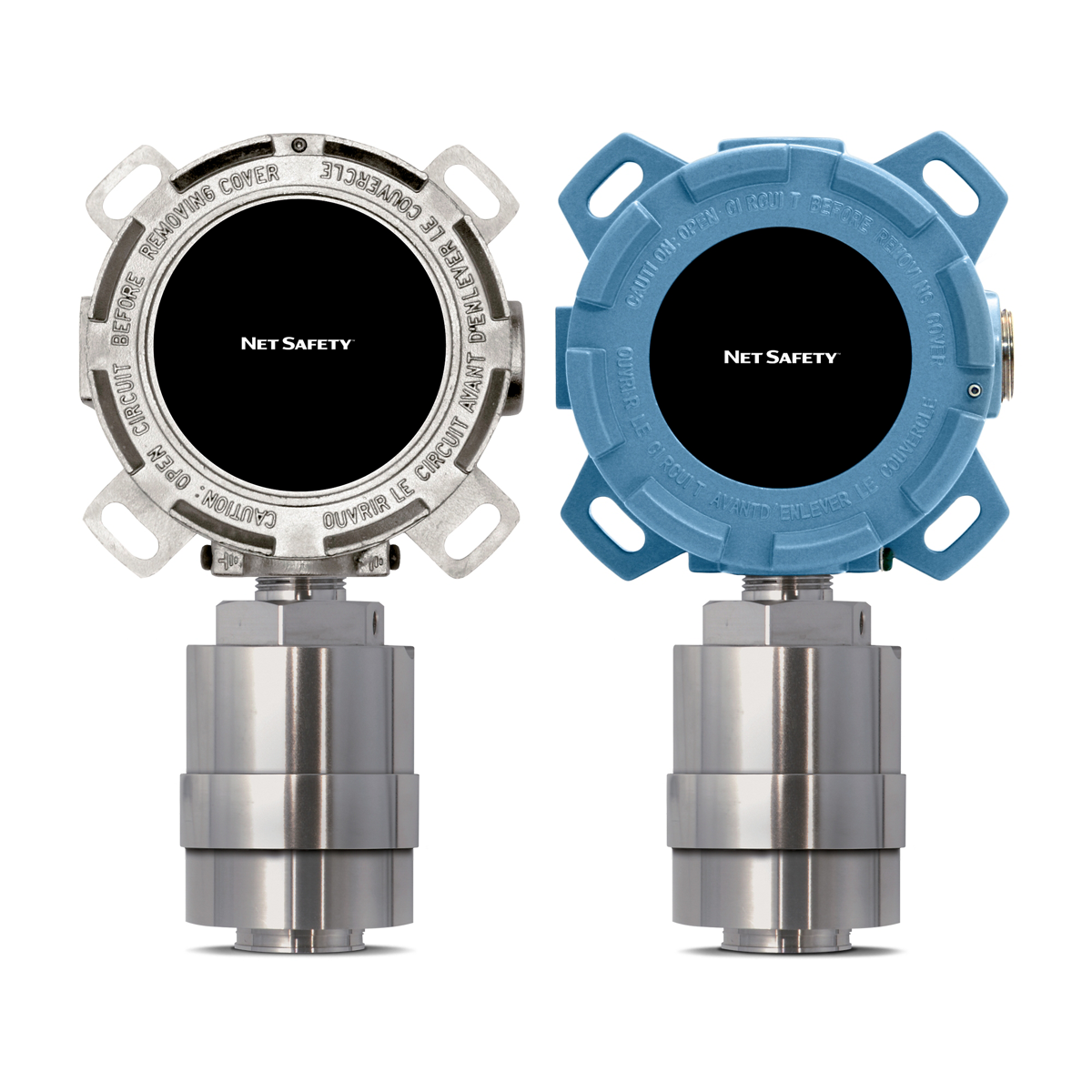
Net Safety SC311 Infrared Combustible Gas Sensor for Millennium II Transmitters, Emerson IR LEL Gas Sensor for Methane, Propane and Ethylene
The Net Safety SC311 infrared combustible gas sensor by Emerson detects hydrocarbon gases such as methane, propane and ethylene from 0-100 % LEL with dual-beam infrared optics, on Millennium II M21 and M22 transmitters. Emerson states it is immune to poisoning and gives it a five-year warranty, with a typical sensor life of 8-10 years. Quote-only: request a quote with the SC311 part number (aluminum or stainless steel housing) and quantity.
Bulk Orders
What is the Net Safety SC311 infrared combustible gas sensor?
The Net Safety SC311 is Emerson’s point infrared (IR) sensor for flammable hydrocarbon gases in the Millennium II series. It measures gas concentration in % LEL (0-100 % LEL) with high resolution dual-beam optics and passes the reading digitally to a Net Safety Millennium II transmitter. Field-selectable gas curves cover methane, propane, ethane, ethylene, hexane and the butane and pentane isomers, and Emerson states the sensor is immune to poisoning.
Emerson’s design note: the dual-beam optics do without reflective surfaces, which it says prevents fouling, fogging and misalignment.
Maintenance note: Emerson recommends periodic bump testing only, plus one calibration a year, and quotes a typical sensor life of 8-10 years against a full five-year warranty. The sensor runs a continuous self-check of several performance parameters and compensates for temperature, pressure and humidity.
What are the Net Safety SC311 specifications?
As printed in the Emerson SC311 data sheet:
| Part number | SC311(A/S)-100-ASSY |
|---|---|
| Detection technology | Infrared, hydrocarbon combustible gases [% LEL] |
| Detection range | 0-100 % LEL (field selectable curves) |
| Gases detected | Methane, Propane, n-Butane, Iso-Pentane, n-Pentane, Ethane, Iso-Butane, Ethylene, Hexane (other gases available, contact factory) |
| Response time | T50 ≤ 4.3 s; T60 ≤ 7 s; T90 ≤ 11 s |
| Accuracy | ±5 % LEL |
| Zero drift | < 5 % full scale per year |
| Repeatability | ±2 % LEL full scale |
| Electromagnetic compatibility (EMC) | IEC 61000-4-3 |
| Operating temperature | -40 °F to +167 °F (-40 °C to +75 °C) |
| Relative humidity | 0-95 % RH non condensing |
| Ingress protection | IP64 |
| Enclosure material | Aluminum (AL6061) or stainless steel (SS316) |
| Conduit connection | 3/4″ NPT |
| Sensor separation | Up to 2,000 feet/600 meters (18 AWG cabling) |
| Transmitter required | Millennium II Series (M21, M22) |
| Typical sensor life | 8-10 years |
| Warranty | Five years |
Selection note: Against its catalytic bead sibling, the SC311 is quicker on paper: T50 ≤ 4.3 s and T90 ≤ 11 s, against T50 ≤ 5.5 s and T90 ≤ 12 s for the Net Safety SC310. Its zero drift is specified per year (< 5 % full scale per year), while the SC310 sheet gives ±2 % per month.
Where is the Net Safety SC311 used, and when is the SC310 catalytic bead sensor the better fit?
The SC311 is a fixed % LEL sensor for hydrocarbon gas hazards in hazardous locations, built for extreme industrial environments according to Emerson and fitted to a Net Safety Millennium II transmitter (M21 single channel or M22 dual channel). Side by side with the Net Safety SC310 catalytic bead sensor, using both data sheets:
- Poisoning: Emerson states the SC311 is immune to poisoning; the SC310 relies on SensorGuard, which Emerson says stops oversaturation above 100 % LEL to prevent premature sensor burnout.
- Gases detected: the SC311 list is hydrocarbons only (methane through hexane, plus ethylene); the SC310 is non-selective and also detects non-hydrocarbon combustibles, with hydrogen, isobutylene and propylene on its list.
- Response time: SC311 T90 ≤ 11 s; SC310 T90 ≤ 12 s.
- Accuracy: SC311 ±5 % LEL; SC310 ±3 % below 50 % and ±5 % above 50 %.
- Power: Emerson states both sensors have the lowest power consumption available.
- Warranty: five years on both.
For a toxic gas or oxygen deficiency point on the same transmitter, use the Net Safety ST3 XChem electrochemical sensor. Background on point versus open path detection: PE Energy guide to gas detection systems.
Selection note: Hydrogen decides it. Hydrogen appears on the SC310 detected-gas list and not on the SC311 list, so a hydrogen or mixed non-hydrocarbon hazard points to the SC310, while a hydrocarbon-only area where poisoning of the sensing element is a concern points to the SC311. Both sensors share the same housing dimensions, the same -40 °C to +75 °C rating and the same transmitters (M21, M22), so switching technology does not change the transmitter.
Which approvals, outputs and documents apply to the Net Safety SC311?
Approval strings as printed in the SC311 data sheet:
| North American | Class I, Division 1, Groups BCD T5; Class I, Zone 1, AEx/Ex d IIB +H2 T5; -40 °C ≤Ta ≤+75 °C |
|---|---|
| IECEx | Ex d IIB+H2 T5 Gb; IECEx FMG 12.0007X |
| INMETRO | Ex d IIB+H2 T4 Gb IP66/67 |
| EMC | IEC 61000-4-3 |
The SC311 communicates digitally with its transmitter; the analog, relay, Modbus or HART output comes from the Millennium II transmitter version. Reference document: SC311 product data, document FGD-PDS-SC311-Infrared-Combustible-Gas-Sensor, dated July 2016. Emerson model page: Net Safety Millennium II SC311 infrared combustible gas sensors.
Installation note: Read the temperature class per scheme: the North American and IECEx markings are T5, the INMETRO marking is T4. The SC311 and SC310 carry the same IECEx certificate number (IECEx FMG 12.0007X), and the sensor’s own ingress rating is IP64.
How do I request a quote for the Net Safety SC311?
Send the part number with the housing, the gas curve the point must use (methane, propane or another listed gas), the Millennium II transmitter it will connect to, any accessories and the quantity. PE Energy confirms price, availability and lead time with the quote. Request an SC311 quote.
| SC311A-100-ASSY | Aluminum housing, hydrocarbon based combustible gases, 0-100 % LEL |
|---|---|
| SC311S-100-ASSY | Stainless steel housing, hydrocarbon based combustible gases, 0-100 % LEL |
| JB-MPD-A / JB-MPD-S | Termination box, digital output |
| CCS-1 | Calibration Cup/Rain Shield/Splash Guard/Dust Filter with DF-1 |
| CC-INLINE | Inline calibration adaptor: brings a slip stream of gas to the sensor and vents it back into the main stream |
Model code example: SC311S-100-ASSY = Net Safety SC311 infrared combustible gas sensor, stainless steel housing, hydrocarbon based combustible gases, 0-100 % LEL. Swap S for A for the aluminum housing (SC311A-100-ASSY).
Installation note: where rain, splash or dust reaches the sensor head, Emerson’s CCS-1 combines a calibration cup, rain shield, splash guard and dust filter (with DF-1) in one part.
Additional information
| Manufacturer | Emerson |
|---|---|
| Brand | Net Safety |
| Model | SC311 |
| Detection technology | Infrared |
| Detected gases | Methane, Propane, n-Butane, Iso-Pentane, n-Pentane, Ethane, Iso-Butane, Ethylene, Hexane |
| Detection range | 0-100 % LEL |
| Compatible transmitters | Millennium II Series (M21, M22) |
| Warranty | Five years |
Related products


Popular Brands


Reviews
There are no reviews yet.