
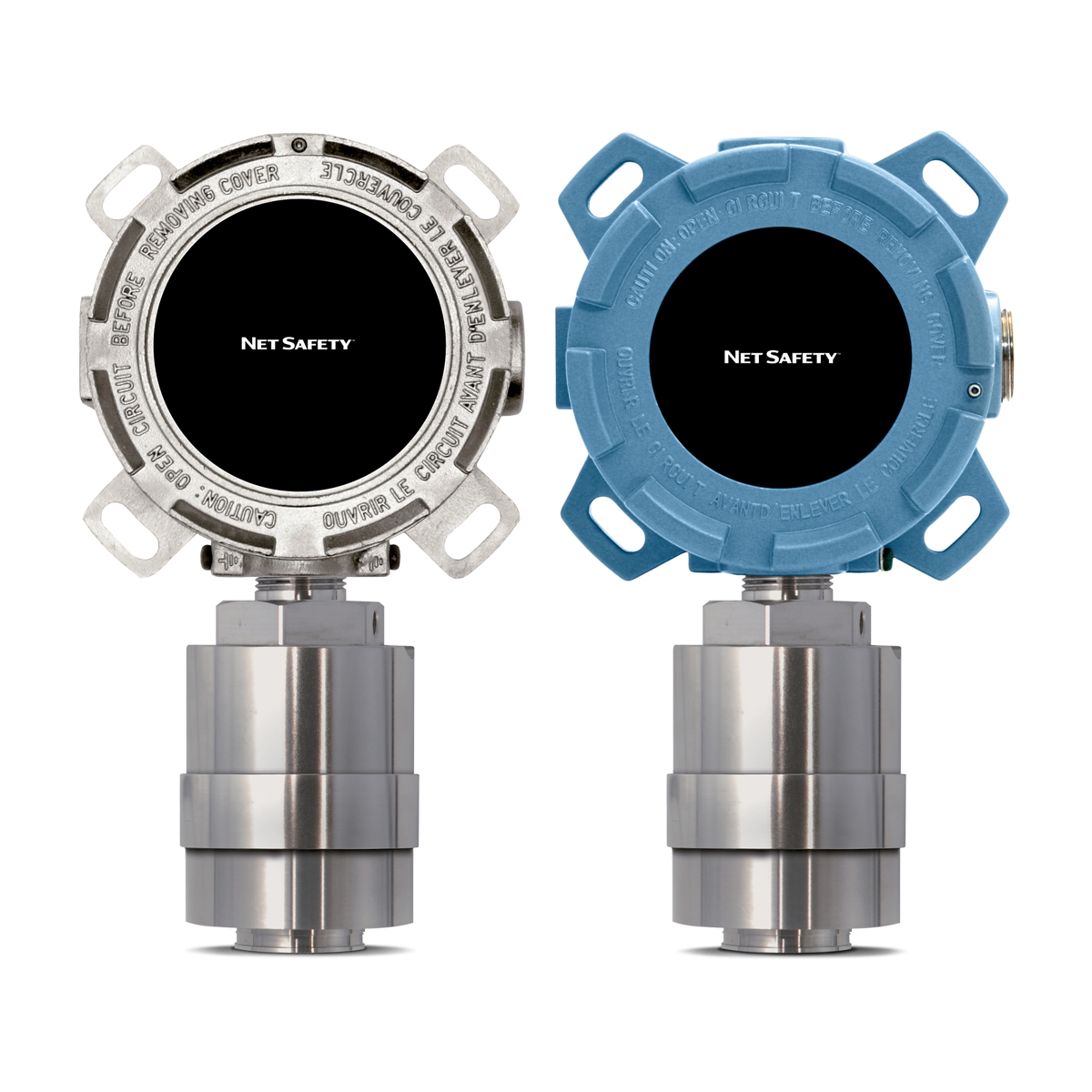
Net Safety ST3 XChem Toxic Gas Sensor for Millennium II Transmitters, Emerson Electrochemical H2S, CO and Oxygen Gas Sensor
The Net Safety ST3 XChem toxic gas sensor by Emerson is an electrochemical gas sensor for the Millennium II platform, built in three versions: hydrogen sulfide (H2S), carbon monoxide (CO) and oxygen (O2) deficiency. The H2S and CO versions run on the M21 or M22 transmitter, the O2 version on M21 HART transmitters only, and every version carries a two-year warranty. Quote-only: request a quote with the ST3 part number and quantity.
Bulk Orders
What is the Net Safety ST3 XChem toxic gas sensor?
The Net Safety ST3 XChem is Emerson’s electrochemical toxic gas sensor for the Millennium II fixed gas detection platform. Each sensor targets one gas, hydrogen sulfide (H2S), carbon monoxide (CO) or oxygen (O2) deficiency, with a triple electrode cell (sensing, reference and counter electrodes), and reports to a Net Safety Millennium II transmitter over a digital link. Emerson calibrates the sensor at the factory, and the transmitter recognizes a newly installed ST3 and loads its configuration profile; the sensor element itself uses Emerson’s SimpleClick design.
According to Emerson, each cell is temperature compensated for its target gas and selected range, and humidity is handled by a diffusion process through a hydrophobic barrier.
Maintenance note: Emerson points out that electrochemical cells wear in normal service and have to be checked and swapped on a schedule. The ST3 end-of-life diagnostic tracks the health of the cell and raises a fault alert when the sensor is due for replacement. Emerson’s calibration frequency is six months for the H2S sensor and three months for the CO and O2 sensors.
What are the Net Safety ST3 XChem specifications?
Figures per gas version, as printed in the Emerson ST3 data sheet (00813-0100-4303, Rev AC).
| Specification | H2S | CO | O2 deficiency |
|---|---|---|---|
| Part number | ST320(A/S)-100-ASSY | ST360(A/S)-1000-ASSY | ST341(A/S)-25-ASSY |
| Detection range | 0-20/50/100 ppm (field-selectable) | 0-500/1000 ppm (field-selectable) | 0-25 percent volume |
| Response time | T20: 10 seconds; T50: 15 seconds; T90: 36 seconds | T20: 10 seconds; T50: 15 seconds; T90: 30 seconds (without accessories) | T20: 7 seconds; T50: 10 seconds; T90: 20 seconds (without accessories) |
| Accuracy | ±3 ppm or 10 percent of reading, whichever is greater | 32 °F to 122 °F (0 °C to 50 °C): ±13 ppm or 5 percent of reading, whichever is greater; -4 °F to 32 °F (-20 °C to 0 °C): ±32 ppm or 17 percent of reading, whichever is greater | ±0.5 percent volume |
| Zero drift | <5 percent full scale annually | < 5 percent full scale annually | < 5 percent full scale annually |
| Repeatability | <1 percent full scale | < 3 percent full scale | < 3 percent full scale |
| Calibration frequency | Six months | Three months | Three months |
| Operating temperature | -40 to +140 °F (-40 to +60 °C) | -4 to 122 °F (-20 to 50 °C) | -4 to 122 °F (-20 to 50 °C) |
| Required transmitters | Net Safety Millennium II M21, M22 | Net Safety Millennium II M21, M22 | Net Safety Millennium II M21-AH-A/S or M21-AHR-A/S only |
Common to all three versions:
| Detection technology | Electrochemical (triple electrode: sensing, reference, counter) |
|---|---|
| Humidity | 15-90 percent relative humidity, non-condensing |
| Ingress protection | IP64 |
| Enclosure material | AL6061 aluminum or SS316 stainless steel |
| Sensor separation | Up to 2,000 ft. (600 m) with 18 AWG cabling |
| EMC | EN 50270: 2006 |
| Warranty | Two years |
Selection note: On Emerson’s figures the O2 sensor responds fastest (T90: 20 seconds), ahead of CO (T90: 30 seconds) and H2S (T90: 36 seconds). The H2S sensor has the widest operating window, -40 to +140 °F (-40 to +60 °C), while the CO and O2 sensors stop at -4 to 122 °F (-20 to 50 °C), and the CO accuracy band widens below 32 °F (0 °C) to ±32 ppm or 17 percent of reading. Check the lowest site temperature before choosing an outdoor CO or O2 point.
Where is the Net Safety ST3 XChem used, and when is another Emerson sensor the better fit?
The ST3 XChem covers fixed toxic gas and oxygen deficiency points on a Net Safety Millennium II transmitter: H2S in field-selectable ranges up to 0-100 ppm, CO up to 0-1000 ppm and oxygen deficiency over 0-25 percent volume. Emerson builds the series for extreme industrial environments, and the sensor can be installed up to 2,000 ft. (600 m) from its transmitter on 18 AWG cable.
- Combustible gas instead of toxic gas: for % LEL detection, pick the Net Safety SC311 infrared sensor (hydrocarbons; Emerson states it is immune to poisoning) or the Net Safety SC310 catalytic bead sensor (hydrocarbon and non-hydrocarbon gases, including hydrogen).
- Toxic and combustible at one point: the Millennium II M22 dual channel transmitter takes two sensors, so one ST3 and one SC3 series sensor can share a transmitter.
- Warranty and service: the ST3 carries two years and a three or six month calibration interval; the SC310 and SC311 carry five years, and Emerson gives the SC311 an annual calibration.
Background on point, open path and wireless detection: PE Energy guide to gas detection systems.
Selection note: The transmitter list is not the same for every gas. Emerson’s data sheet names the M21 and M22 for the H2S and CO sensors, but limits the O2 deficiency sensor to the M21-AH-A/S and M21-AHR-A/S, the M21 versions with HART output. An oxygen point therefore needs an M21 HART transmitter, not an M22.
Which approvals, outputs and documents apply to the Net Safety ST3 XChem?
Markings as printed in the ST3 data sheet:
| North America | Class 1, Division 1, Groups BCD T5; Ex d IIB+H2 T5; Class 1, Zone 1, AEx d IIB+H2 T5 Gb; Type 4X, IP64 |
|---|---|
| IECEx | Ex db IIB+H2 T5 Gb; -40 °C ≤ Tamb ≤ +75 °C |
| Special condition of use (IECEx) | Flameproof joints are not intended to be repaired. |
| EMC | EN 50270: 2006 |
The ST3 communicates digitally with its Millennium II transmitter; the analog, relay, Modbus or HART signal to the control system comes from the transmitter version you choose. Reference document: Net Safety ST3 XChem data sheet 00813-0100-4303, Rev AC (November 2020). Emerson model page: Net Safety Millennium II ST3 XChem toxic gas sensor.
Installation note: The IECEx ambient range on the marking (-40 °C ≤ Tamb ≤ +75 °C) is wider than the sensors’ operating limits: -40 to +60 °C for H2S and -20 to 50 °C for CO and O2. Plan the location on the operating limits. Emerson’s special condition of use also states that the flameproof joints are not meant to be repaired.
How do I request a quote for the Net Safety ST3 XChem?
Send the ST3 part number for each gas, the housing (A for aluminum or S for stainless steel, following the ST320(A/S)-100-ASSY pattern), the range you plan to set, the Millennium II transmitter it will run on and the quantity. PE Energy confirms price, availability and lead time with the quote. Request an ST3 XChem quote.
| ST320A-100-ASSY | Hydrogen sulfide (H2S), 0-20/50/100 ppm field-selectable, aluminum |
|---|---|
| ST360A-1000-ASSY | Carbon monoxide (CO), 0-500/1000 ppm field selectable, aluminum |
| ST341A-25-ASSY | Oxygen (O2) deficiency, 0-25% by volume, aluminum |
Emerson stars these three aluminum codes as its most common ST3 options.
Model code example: Emerson’s typical model number, Net Safety ST320A-100-ASSY, is the ST3 XChem hydrogen sulfide (H2S) sensor in aluminum with the 0-20/50/100 ppm field-selectable range. In the three codes Emerson prints, the number after the housing letter matches the top of the range (-100, -1000, -25).
Additional information
| Manufacturer | Emerson |
|---|---|
| Brand | Net Safety |
| Model | ST3 |
| Detection technology | Electrochemical |
| Detected gases | Hydrogen sulfide (H2S), Carbon monoxide (CO), Oxygen (O2) deficiency |
| Part number | ST320(A/S)-100-ASSY, ST360(A/S)-1000-ASSY, ST341(A/S)-25-ASSY |
| Compatible transmitters | Net Safety Millennium II M21, M22 (H2S, CO), Net Safety Millennium II M21-AH-A/S, M21-AHR-A/S (O2) |
| Warranty | Two years |
Related products


Popular Brands


Reviews
There are no reviews yet.