
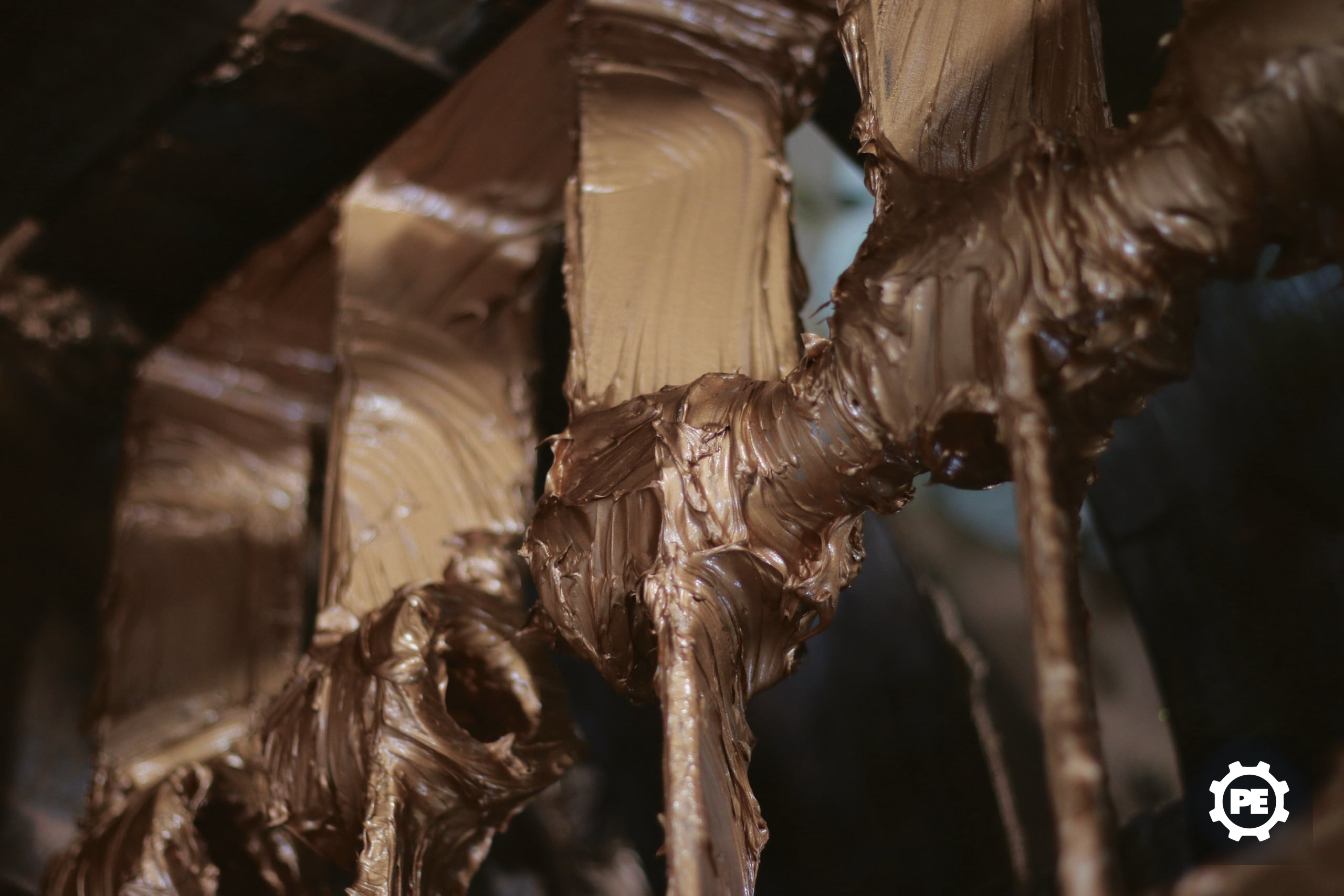
Every time a drill string is made up, the thread connection is under enormous compressive and torsional load. If the thread compound fails to control friction precisely, the connection either under-torques and risks standoff, or over-torques and permanently deforms the shoulder. Either outcome means pulled pipe, downtime, and a connection that may never hold correct makeup torque again. Jet-Lube Kopr-Kote was engineered specifically to prevent that outcome on API rotary shouldered connections, with a copper-flake solids package and an aluminum-complex grease base that together hold a calibrated friction factor of 1.15 across the full service range from 0°F to 450°F (-18°C to 232°C).
What is Jet-Lube Kopr-Kote and what problem does it solve on drill string connections?
Kopr-Kote is a copper-based, lead-free, NLGI Grade 1 drilling compound formulated for oilfield threads on drill collars, tool joints, and drill strings. Its primary job is to deliver a consistent, repeatable friction factor so that makeup torque applied at the surface translates predictably into shoulder load at the connection.
The product carries API RP 5A3 compliance for rotary shouldered connections, which is the baseline approval required by most major operators before a thread compound is permitted on a rig. The solids package combines copper flake, graphite, and extreme-pressure additives. That combination is not cosmetic: copper flake physically increases the friction coefficient under compressive loading, which counteracts the tendency of high-torque makeup to run past the shoulder and cause deformation. The measured friction factor is 1.15 relative to API RP 5A3 Annex I, and torque tables built for that factor are applied directly to API drill string connection specifications.
How does the aluminum-complex grease base protect threads between makeup cycles?
The thickener in Kopr-Kote is a complex soap (aluminum-complex) base in a petroleum fluid. That combination gives the grease a dropping point of 450°F (232°C) per ASTM D-2265, meaning the base structure does not melt or migrate out of the thread form at normal downhole temperatures within its rated service window.
Aluminum-complex grease is known for high water resistance and adhesion to metal surfaces, which is why Kopr-Kote is specifically listed as sticking to wet joints. On a rig floor where connections are exposed to drilling mud, rain, or seawater spray before makeup, a compound that washes off immediately is useless. Oil separation at 212°F (ASTM D-6184) is rated at less than 3.0 wt.% loss, confirming the base oil stays bound in the structure rather than bleeding out during heat cycles. The flash point exceeds 430°F (221°C) per ASTM D-92, which matters for storage safety in enclosed pipe racks and heated rig buildings.
What does the 4-ball weld point result tell you about Kopr-Kote’s extreme-pressure performance?
The ASTM D-2596 4-ball weld point for Kopr-Kote is 800 kgf (typical). This test measures the load at which a lubricant film fails and the steel balls weld together under sliding contact. An 800 kgf weld point is a direct indicator of the compound’s ability to prevent galling and seizing on thread flanks under the compressive loads generated during makeup.
Tool joint and drill collar threads are fine-pitch, hardened steel surfaces. When they spin together under torque without adequate extreme-pressure protection, the asperities on opposing thread faces cold-weld and tear apart, producing galling that destroys the thread form permanently. The extreme-pressure additive package in Kopr-Kote, supported by the copper flake and graphite solids, creates a sacrificial boundary film that survives contact loads well above what standard greases tolerate. The copper strip corrosion rating of 1A (ASTM D-4048) confirms that despite the copper filler content, the compound does not aggressively attack the copper-alloy or steel surfaces it contacts.
How should makeup torque be calculated when using Kopr-Kote on API connections?
For API drill string connections, the correct procedure is to multiply the thread-recommended torque value by 1.15 to account for Kopr-Kote’s published friction factor. That multiplier aligns the applied torque with the shoulder load the connection requires for a pressure-tight, mechanically sound joint.
This step is frequently skipped or misunderstood in the field. Using a torque chart built for a friction factor of 1.0 with a compound that actually runs at 1.15 means the connection is under-loaded at the shoulder relative to design intent. For premium connections such as HI-TORQUE, eXtreme Torque XT, or XT-M that are engineered specifically for a friction factor of 1.0, Kopr-Kote is not the correct product. Those connections require Kopr EXT FF 1.0 and the premium connection manufacturer’s specified torque values. Swapping compounds without adjusting torque tables is one of the most common field errors that leads to connection failures, and Jet-Lube’s own product data explicitly addresses this distinction. For additional guidance on connection-specific torque, the API standards portal provides access to the current edition of API RP 5A3, which governs thread compound performance criteria for rotary shouldered connections.
When is Kopr-Kote NOT the right compound, and what should be used instead?
Kopr-Kote is designed for standard API oilfield thread conditions. It is not recommended for invert emulsion muds or high-pH mud systems. In those environments, the base chemistry and solids package can be compromised by the alkaline or oil-based mud contamination that inevitably contacts the thread during drilling operations. The correct product for those conditions is Jet-Lube EXTREME NCS-30 ECF, which is specifically formulated for wear protection on wedge-type thread connections and tolerates invert mud exposure.
For friction-factor-specific applications requiring exactly 1.0, the product to specify is Jet-Lube Kopr EXT FF 1.0. These distinctions exist because premium connection manufacturers engineer their thread geometry and torque specifications around a precise friction factor, and deviation in either direction, higher or lower, shifts the actual shoulder load away from the design window. Using the wrong compound in a premium connection can result in overtorque, galling, or a connection that appears made up correctly but is not carrying the designed preload. You can browse the full range of Jet-Lube Products available through PE Energy to identify the correct compound for your specific connection type and mud system.
What environmental and regulatory approvals does Kopr-Kote carry?
Kopr-Kote holds a CEFAS OCNS Group B environmental rating for UK offshore operations, which classifies it as acceptable for use in environments governed by UK offshore chemical notification requirements. It is also not classified as a marine pollutant, a critical distinction for offshore drilling programs where overboard discharge risk is assessed during chemical approval workflows.
The product is DOT approved (CA2004080025) for transportation, and it carries NAM/Shell approval for under-balanced drilling applications. The lead-free and zinc-free formulation addresses the primary environmental objection that has led regulators and operators to phase out traditional lead-based thread compounds over the past two decades. The specific gravity is 1.15 with a density of 9.6 lb/gal, which is relevant when calculating volume requirements for large-diameter drill collars where thread surface area per joint is substantially higher than on standard drill pipe. The full technical data sheet is available as the KOPR-KOTE document on PE Energy’s site for specification review.
Is there an Arctic-grade version of Kopr-Kote for cold-weather drilling operations?
Yes. Kopr-Kote is available in an Arctic grade formulated for low-temperature field conditions. Standard NLGI Grade 1 compounds can stiffen significantly below 0°F (-18°C), making application difficult on the rig floor and reducing their ability to coat thread forms evenly before makeup. The Arctic grade maintains workable consistency at temperatures where the standard grade becomes too stiff to spread uniformly.
The standard Kopr-Kote service rating begins at 0°F (-18°C) and extends to 450°F (232°C). For operations in Arctic or sub-Arctic environments such as northern Canada, Alaska, or northern Russia where ambient and pipe-surface temperatures regularly fall below that lower limit, the Arctic-grade formulation ensures the penetration value measured per ASTM D-217 at the application temperature remains in a workable range. The ASTM D-217 penetration of the standard grade at 77°F is 310 to 330 (worked), which is a soft, easily spreadable consistency at room temperature. At significantly sub-zero temperatures that consistency shifts, and the Arctic grade is the engineered response to that operational challenge.
Where is Kopr-Kote applied, and how is it packaged for rig-floor use?
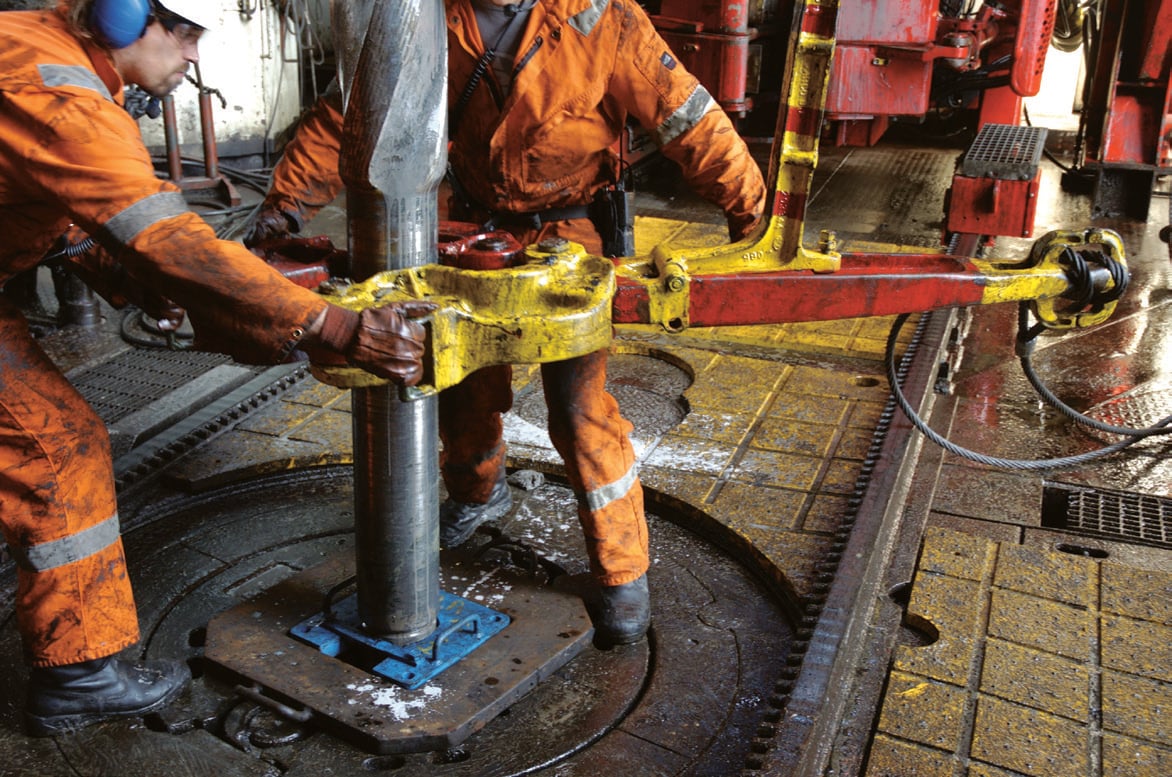
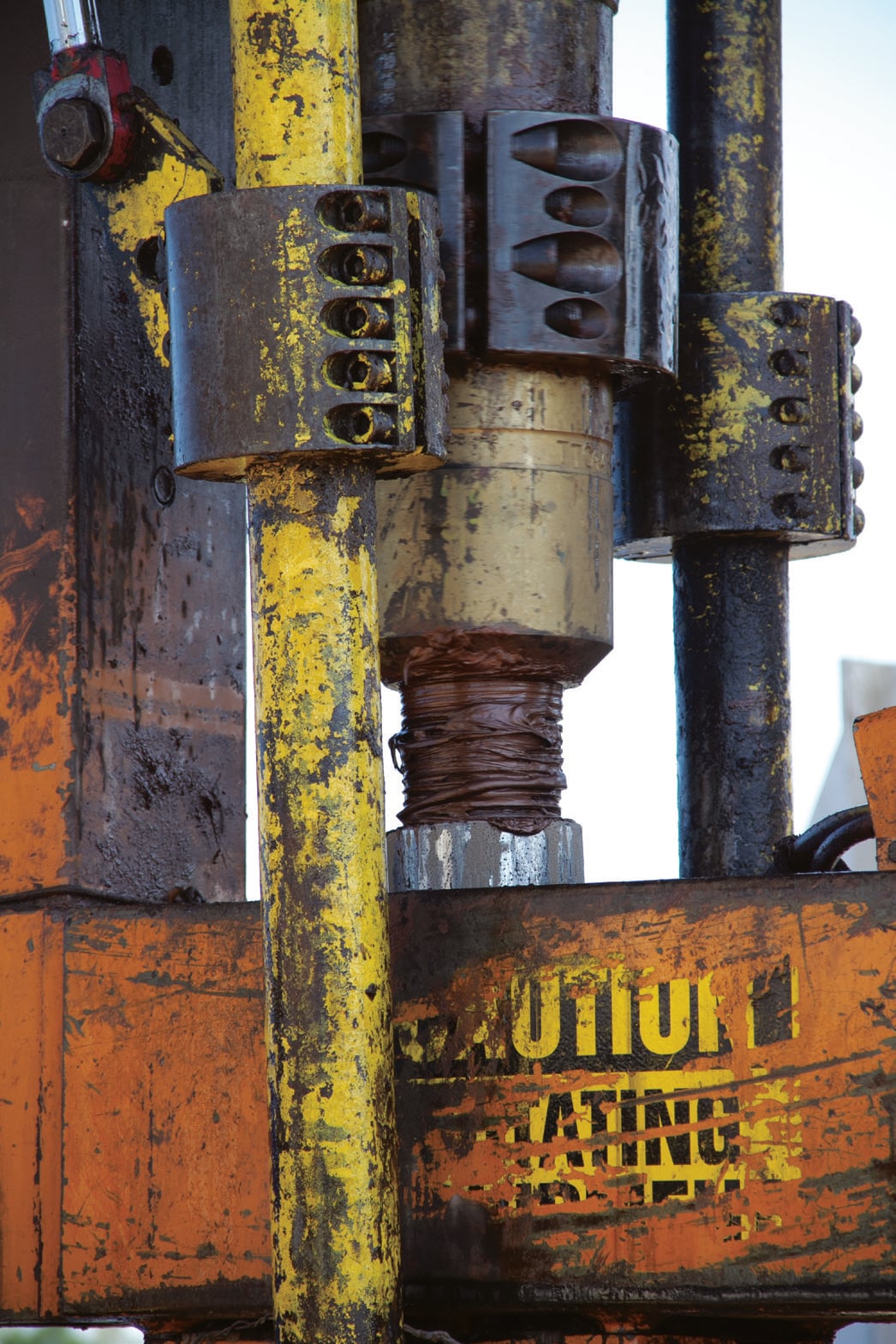
Kopr-Kote is applied to oilfield threaded connections on drill collars, tool joints, and drill strings before each makeup operation. The compound is brushed or daubed onto the pin and box thread faces and the shoulder area, ensuring full coverage before the connection is spun in. Because it sticks to wet joints, it does not need to be applied to dried or pre-cleaned threads, which matters on a live rig floor where pipes come out of the mouse hole or V-door still wet from the mud pit.
For rig procurement and inventory purposes, the standard packaging option available through PE Energy is the 10115 Jet-Lube Kopr-Kote 47 lb Pail, which is the most common unit for drill floor use. The pail format allows a tong hand or connection specialist to access the compound with a brush directly during connection makeup without decanting into smaller containers. Additional application guidance and background on the product’s field use is available in the Protect the Connections of Your Drilling Tools overview, and the product sell sheet can be downloaded as Korp Kote_SS_JL_12-17 for easy field reference. For the broader Jet-Lube product portfolio including EXTREME NCS-30 ECF and Kopr EXT FF 1.0, the Jet-Lube Products catalog page on PE Energy lists current available SKUs.
Summary: when Kopr-Kote is the right call, and when it is not
Kopr-Kote is the correct compound when the application involves API rotary shouldered connections on drill collars, tool joints, or standard drill strings, the friction factor in the torque specification is 1.15, the mud system is water-based or otherwise not invert or high-pH, and the operating temperature falls within the -18°C to 232°C service window. Its API RP 5A3 compliance, 800 kgf weld point, and aluminum-complex grease base give it the combination of regulatory acceptance, extreme-pressure protection, and thermal stability that API drill string makeup requires.
It is the wrong product when the connection is a premium thread engineered for friction factor 1.0 (specify Kopr EXT FF 1.0), when the mud system is invert emulsion or high-pH (specify Jet-Lube EXTREME NCS-30 ECF), or when operating temperatures will consistently fall below 0°F without the Arctic-grade formulation. Specifying the correct product for the exact connection type and mud system is not a formality: it is a direct input into whether the shoulder load at makeup matches the design intent of the connection and whether the joint survives downhole cyclic loading without fatigue failure or thread galling.
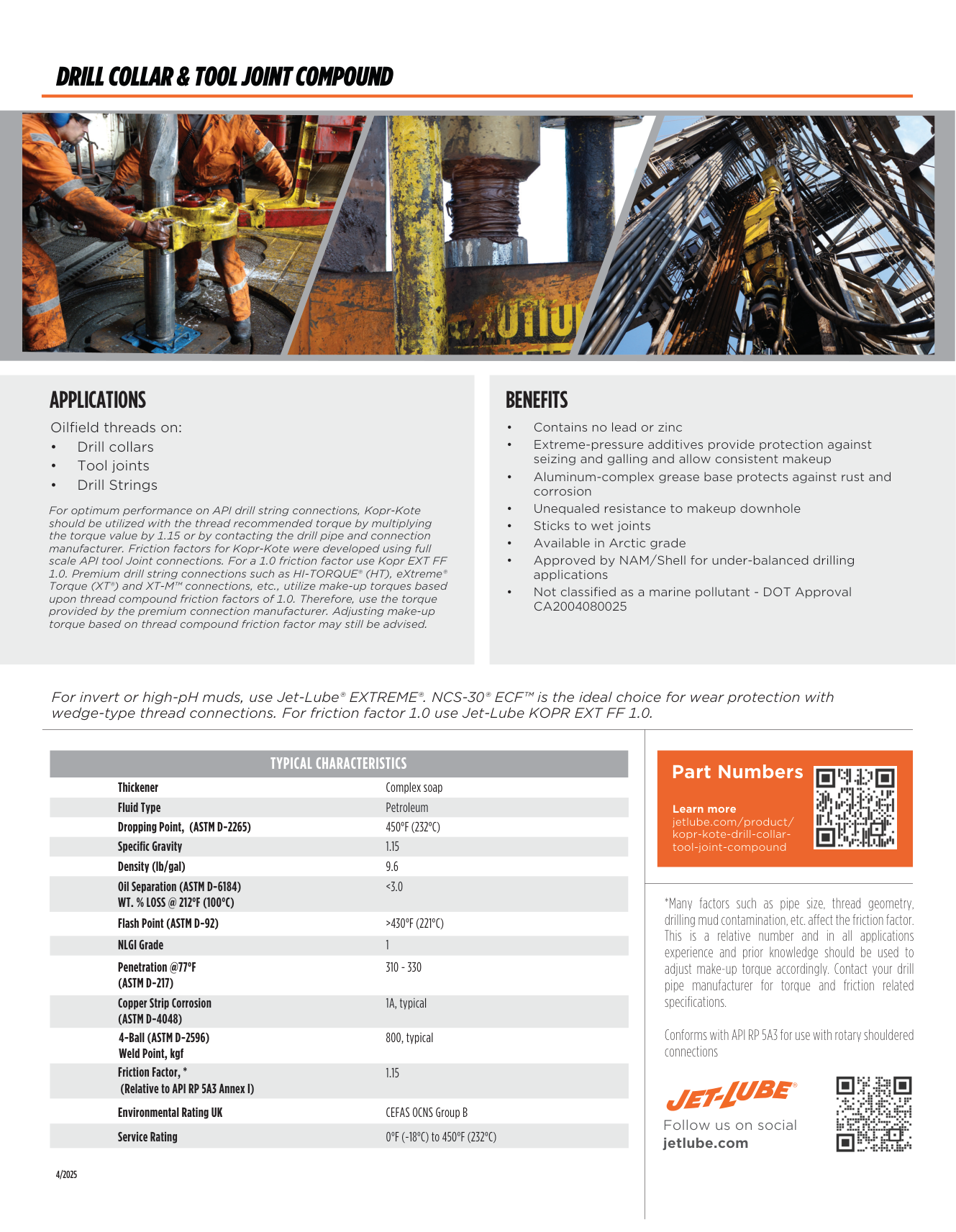
Kopr-Kote® Drill Collar & Tool Joint Compound
NLGI Grade 1 • Copper-Based • Lead-Free • API RP 5A3 Approved
Highly trusted copper-based drilling compound for drill collars, tool joints, and drill strings. The unique solids package — copper flake, graphite, and extreme-pressure additives — counteracts excessive circumferential makeup by increasing friction under compressive forces, preserving joint efficiency and preventing standoff or deformation.
Lead-Free • API RP 5A3 Compliant • CEFAS OCNS Group B (UK Environmental Rating) • DOT Approved (CA2004080025)
APPLICATIONS — OILFIELD THREADS ON:
- Drill collars
- Tool joints
- Drill strings
Note: For invert or high-pH muds, use Jet-Lube® EXTREME®. NCS-30® ECF™ for wear protection on wedge-type thread connections. For friction factor 1.0 use Jet-Lube KOPR EXT FF 1.0.
KEY BENEFITS:
- Contains no lead or zinc
- Extreme-pressure additives protect against seizing and galling
- Allows consistent makeup torque
- Aluminum-complex grease base protects against rust and corrosion
- Unequaled resistance to makeup downhole
- Sticks to wet joints
- Available in Arctic grade
- Approved by NAM/Shell for under-balanced drilling applications
- Not classified as a marine pollutant
TYPICAL CHARACTERISTICS:
| Property / Test Method | Value |
|---|---|
| NLGI Grade | 1 |
| Thickener | Complex Soap |
| Fluid Type | Petroleum |
| Dropping Point (ASTM D-2265) | 450°F (232°C) |
| Flash Point (ASTM D-92) | >430°F (221°C) |
| Specific Gravity | 1.15 |
| Density | 9.6 lb/gal |
| Oil Separation @ 212°F (ASTM D-6184), wt.% loss | <3.0 |
| Penetration @77°F (ASTM D-217) | 310–330 |
| Copper Strip Corrosion (ASTM D-4048) | 1A, typical |
| 4-Ball Weld Point, kgf (ASTM D-2596) | 800, typical |
| Friction Factor* (Relative to API RP 5A3 Annex I) | 1.15 |
| Service Rating | 0°F to 450°F (-18°C to 232°C) |
| Environmental Rating (UK) | CEFAS OCNS Group B |
| API Compliance | Conforms with API RP 5A3 for rotary shouldered connections |
*Many factors such as pipe size, thread geometry, and drilling mud contamination affect friction factor. Contact your drill pipe manufacturer for torque and friction-related specifications.
MAKE-UP TORQUE GUIDANCE:
For optimum performance on API drill string connections, multiply the thread-recommended torque value by 1.15, or contact the drill pipe and connection manufacturer. For premium connections (HI-TORQUE®, eXtreme® Torque XT®, XT-M™) that use friction factor 1.0 — use Kopr EXT FF 1.0 and apply the premium connection manufacturer’s specified torque.
Jet-Lube, Inc. • jetlube.com • 800.538.5823 • 713.670.5700 • Product: Kopr-Kote® Drill Collar & Tool Joint Compound • Revised: 04/2025
Cold-weather operations? See the pumpable Kopr-Kote Arctic variant (rated to -65°F) for waterwell and HDD applications where standard-grade compound stiffens.