Here’s a fact that will make your stomach drop: moisture contamination is silently eating away at your industrial equipment every single day, costing you thousands in repairs, downtime, and premature replacements.
While you’re focused on production schedules and quarterly targets, water vapor is sneaking into your hydraulic systems, gear boxes, and oil reservoirs through every breath cycle. It’s happening right now, in your facility, whether you’re in Arizona or Alaska.
The worst part? Most operators don’t realize they have a moisture problem until it’s too late. Until the bearing seizure happens. Until the hydraulic pump fails catastrophically. Until that $50,000 piece of equipment becomes scrap metal.
What Happens When You Ignore This Problem (It Gets Ugly Fast)
Let me paint you a picture of what moisture contamination does to your operation:
First, it attacks your lubricants. Water breaks down oil additives faster than a hot knife through butter. Your expensive synthetic hydraulic fluid that should last 2,000 hours? Now it’s degraded sludge after 500 hours. You’re buying oil four times more often than you should.
Then it goes after your metal components. Rust and corrosion start forming on precision-machined surfaces. Bearings develop pitting. Valve spools stick. Seal grooves corrode. These aren’t cosmetic problems – they’re death sentences for your equipment.
Finally, it triggers the cascade of failure. One compromised component leads to another. Your “routine maintenance” becomes emergency repairs. Your planned downtime becomes unplanned disasters. Your profit margins evaporate.
Industry studies show that just 0.1% water contamination can reduce bearing life by up to 80%. That’s one-tenth of one percent destroying 80% of your bearing’s useful life.
But here’s what really keeps maintenance managers up at night: moisture damage is cumulative and often invisible until failure occurs. You can’t see water vapor entering your system. You can’t hear it attacking your components. You only discover it when something expensive breaks.
And if you think this only affects equipment in humid climates, think again. Temperature cycling in any environment creates condensation. Every heating and cooling cycle pulls moisture-laden air into your systems like a sponge.
The Solution That Actually Works (Without Breaking Your Budget)
What if I told you there’s a way to completely eliminate moisture contamination from entering your critical equipment? Not reduce it. Not minimize it. Eliminate it.
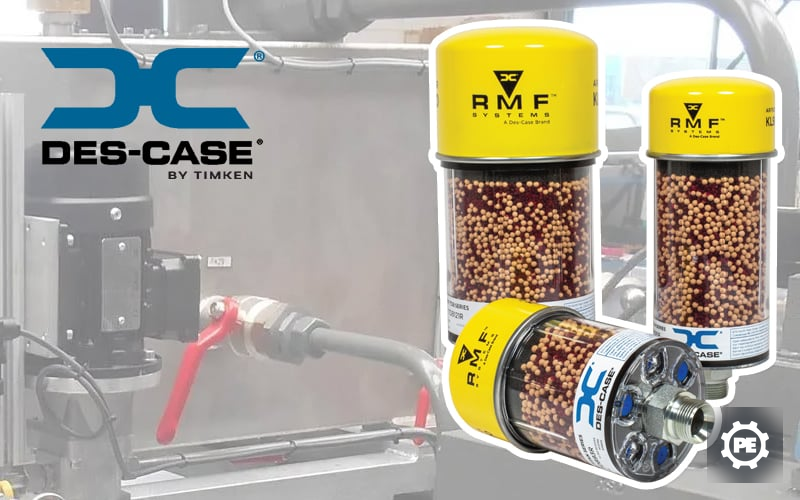
The Des-Case TDB Series Breathers don’t just filter air – they strip every molecule of water vapor from it before it reaches your valuable fluids. These aren’t your grandfather’s basic breathers with a handful of silica gel beads.
This is precision-engineered moisture protection that works in temperatures from -40°F to 194°F, handles airflows up to 53 CFM, and provides absolute 3-micron filtration with β3 ≥ 200 efficiency. Translation: nothing harmful gets through.
The secret weapon is the ZR Gel desiccant technology. Unlike ordinary desiccants that give up when humidity gets high, ZR Gel maintains its moisture-absorbing power across a wide range of conditions. And the color-changing indicator (red to yellow) tells you exactly when service is needed – no guessing, no premature changes, no surprises.
Why Every Specification Matters To Your Bottom Line
Let’s break down exactly why the TDB Series breathers are engineered to save you money:
The glass fiber filter media isn’t just about clean air – it’s about consistent performance. Cheaper breathers use filter media that degrades quickly, allowing progressively more contamination through over time. Glass fiber maintains its 3-micron absolute efficiency throughout its service life. Every cubic foot of air gets the same level of protection whether it’s day one or day 365.
The ZR Gel volumes (320cc, 600cc, and 1040cc) are precisely calculated for real-world duty cycles. The TDB93 with 0.6 lbs of desiccant absorbs up to 3 fl. oz of water vapor. The TDB96 handles 5.5 fl. oz with 1 lb of desiccant. The TDB121 powers through 10 fl. oz with 1.8 lbs of ZR Gel. This isn’t random sizing – it’s engineered capacity that matches actual industrial breathing requirements.
The glass-filled nylon standpipe with built-in oil mist reducer solves a problem most people don’t even know exists. When equipment breathes out, it can carry oil mist that contaminates and degrades desiccant material. This built-in protection keeps your desiccant working at full capacity, extending service intervals and maintaining protection levels.
Temperature range from -40°F to 194°F means these breathers work where others fail. Mining equipment in Alaska. Solar tracking systems in Arizona. Offshore platforms in the North Sea. Paper mills with steam environments. The same breather, the same protection, regardless of climate extremes.
The silicone check valves (available on “V” models) prevent backflow and contamination during pressure changes. When your equipment heats up and internal pressure rises, the check valve prevents potentially contaminated air from being pushed out and drawn back in during cooling. It’s like having a one-way valve for protection.
Chemical compatibility with all mineral oils, most synthetic oils, and diesel fuels means one breather solution for your entire facility. No more maintaining different breather types for different applications. No more compatibility charts. No more guesswork about chemical interactions.
The cracking pressure of just 0.05 psi means these breathers activate with the slightest pressure differential – protecting your equipment even during minor temperature fluctuations that other breathers would ignore.
High dirt holding capacity means longer service intervals. While competitors’ breathers clog quickly in dusty environments, the TDB Series keeps working. Fewer service calls, lower maintenance costs, and consistent protection even in harsh conditions.
Multiple connection options (¾” BSPP, 1″ BSPP, 1″ NPT, DIN6) eliminate the “doesn’t fit” problem. Whether you’re working on European hydraulics, American equipment, or international machinery, there’s a connection that fits properly without adapters or modifications.
Where Smart Operations Are Already Using These (And Seeing Results)
The TDB Series breathers are proving their worth across the most demanding industrial applications. Wind energy operations use them to protect gearbox lubricants in turbines that cycle through massive temperature swings daily. When a gearbox failure can cost $500,000 and weeks of downtime, moisture protection isn’t optional.
Mining operations rely on them for mobile equipment hydraulics that operate in everything from desert heat to arctic cold, often in the same shift. Aviation ground support equipment uses them to maintain hydraulic performance despite constant temperature cycling and weather exposure.
For a complete guide to desiccant breathers and their applications, you’ll discover why operations from petrochemical plants to pulp and paper mills are making this technology standard equipment.
Nautical applications present the ultimate moisture challenge – salt air, temperature cycling, and high humidity. The TDB Series handles these conditions without breaking down or requiring constant maintenance. Truck differentials and mobile hydraulics get reliable protection regardless of route or climate.
The Des-Case TDB96R-1B Desiccant Breather has become the go-to choice for mid-range applications where proven performance matters more than initial cost savings.
The Service Story That Separates Winners From Wishful Thinking
Here’s what sets the TDB Series apart from every other breather on the market: they’re fully serviceable with readily available spare parts. When your desiccant is spent, you don’t throw away the entire unit. You replace the ZR Gel refill and keep protecting your equipment.
The spare kits contain everything needed for complete service: air filter, ZR Gel refill, foam filters, bottom seal stickers, and adapter plug. One part number gets you everything. No searching for components. No compatibility questions. No downtime waiting for special-order parts.
This serviceability isn’t just convenient – it’s profitable. Over the life of your equipment, you’ll spend a fraction of what disposable breathers would cost. And because each component is designed for multiple service cycles, you’re getting maximum value from every dollar invested.
The Math That Makes This Decision Simple
Let’s be honest about what moisture contamination really costs you. A hydraulic pump failure on mobile equipment: $8,000 to $15,000 plus downtime. Premature bearing replacement in a gearbox: $3,000 to $25,000 depending on size. Early oil changes due to contamination: $500 to $2,000 per change, plus disposal costs.
Now compare that to the cost of proper moisture protection. Even the largest TDB121 breather costs less than a single bearing replacement on most industrial equipment. The ROI isn’t calculated in years – it’s calculated in months, sometimes weeks.
But here’s the real kicker: prevention costs pennies per day while failures cost thousands per incident. You’re either paying for protection now, or paying for destruction later. There’s no middle ground.
Smart operations understand that why Des-Case breathers protect your profits – because equipment protection and profit protection are the same thing.
Your Equipment Is Breathing Right Now (And Every Breath Matters)
While you’ve been reading this, your equipment has taken hundreds of breaths. Each one either brought in clean, dry air that protects your investment, or contaminated, moisture-laden air that’s starting the destruction process.
The Des-Case TDB Series breathers represent more than moisture protection – they’re insurance policies for your equipment, profit margins, and operational reliability. With precise engineering, proven performance, and field-tested durability, they solve the moisture contamination problem completely.
The question isn’t whether you can afford this protection. The question is whether you can afford to operate without it. Every day you wait is another day of cumulative damage, another step closer to expensive failure, another opportunity for moisture to compromise your equipment’s reliability.
Choose the TDB93 for smaller applications, the TDB96 for standard duty, or the TDB121 for high-capacity requirements. Add check valves for pressure-sensitive applications. Select the connection that fits your equipment. Then install it and forget about moisture contamination forever.
Because smart operators don’t gamble with moisture protection. They invest in it.
ZR Gel Desiccant • TDB 93 / 96 / 121
Equipped to function in almost any environment with many connection options. Fully serviceable with high dirt holding capacity and a durable glass-filled nylon standpipe with built-in oil mist reducer to prevent oil from reaching the desiccant.
Color Indication: Red to Yellow • RMF Systems — A Des-Case Brand

MATERIALS & COMPONENTS:
- Filter Media: Glass Fiber
- Hydrophilic Media: ZR Gel
- Check Valves: Silicone
- Other Components: Copolyester, Buna-N, Galvanized Steel, Nylon 6 30% Glass Filled, Aluminum (check valve breathers only)
CHEMICAL COMPATIBILITY:
Compatible with all mineral oils, most synthetic oils and diesel fuels. Contact Des-Case technical support for chemical compatibility inquiries.
1PERFORMANCE SPECIFICATIONS:
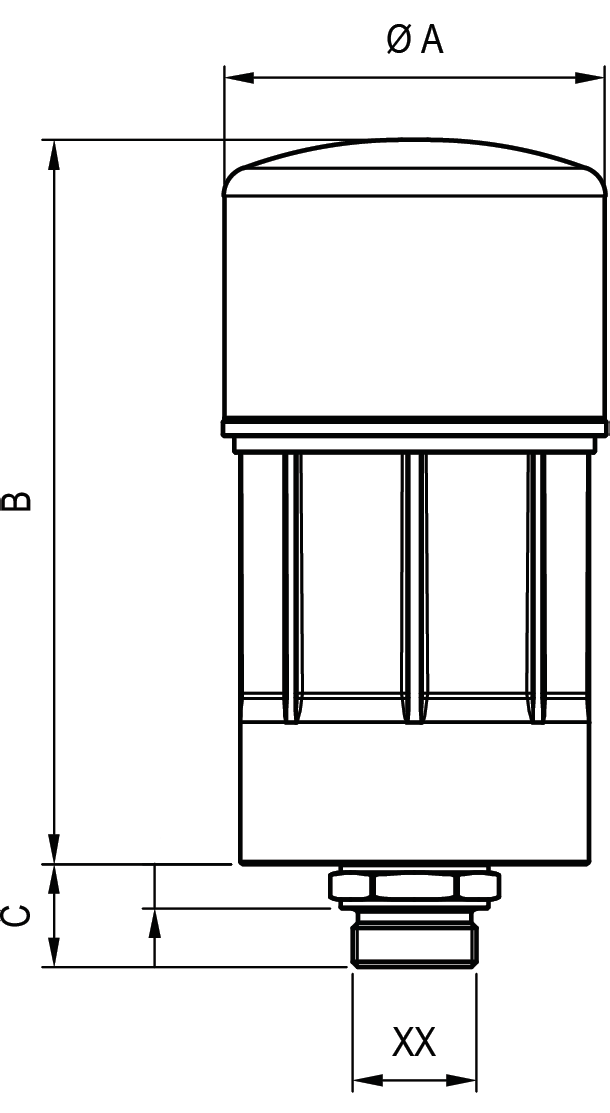
| Specification | 93 | 96 | 121 |
|---|---|---|---|
| Temperature Range | -40°F to 194°F (-40°C to 90°C) | ||
| Filter Efficiency | 3 μm absolute (β3 ≥ 200) | ||
| Adsorption Material | ZR Gel 3-6 mm | ||
| ZR Gel Volume | 320 cc | 600 cc | 1040 cc |
| Amount of Desiccant | .6 lbs (250 g) | 1 lbs (460 g) | 1.8 lbs (800 g) |
| Water Adsorption Capacity (Max. Water Retention) | 3 fl. oz (94 ml) | 5.5 fl. oz (172 ml) | 10 fl. oz (300 ml) |
| Color Indication | Red to Yellow | ||
| Check Valve Cracking Pressure (order codes ending in “V”) | .05 psi (.003 bar) | ||
2APPLICATION SIZING RECOMMENDATIONS:
| Parameter | 93 | 96 | 121 |
|---|---|---|---|
| Max. Airflow without Check Valves | 25 cfm (700 l/min) | 25 cfm (700 l/min) | 53 cfm (1500 l/min) |
| Max. Airflow with Check Valves | 11 cfm (300 l/min) | 11 cfm (300 l/min) | 14 cfm (400 l/min) |
1NOTE: Small variations in the manufacturing process can be common and will be within the allowable engineering tolerances. All above data is nominal and provided for information only and subject to change. All metric conversions are approximate.
2NOTE: This is intended as a general guideline for sizing only; other considerations, such as: humidity level, frequency of air flow, ambient temperatures, and chemical compatibility are very important in sizing a breather properly. Please contact Des-Case for assistance.
ORDERING CODES:
TDB — [Size] [Drying Agent] [Check Valve] [Connection]
93 = 320 cc • 96 = 600 cc • 121 = 1040 cc
R = ZR Gel
V = With • – = Without
34B = ¾” BSPP • 1B = 1″ BSPP • 1N = 1″ NPT • DIN6 • 34BF = ¾” BSPP female
SPARE PARTS:
| Part | 93 Series | 96 Series | 121 Series |
|---|---|---|---|
| Air Filter | KL90 (9331034) | KL120 (9317903) | |
| ZR Gel Refill | RF-300 (9331156) | RF-600 (9331155) | RF-1000 (9331157) |
| Spare Kit* | RK-93 (9318115) | RK-96 (9318116) | RK-121 (9318117) |
*The spare kit contains 1x air filter, 1 ZR Gel refill, 2x foam filters, 1x bottom seal stickers, 1x adapter plug.
Typical Applications:
- Mobile & off-road equipment
- Hydraulics
- Nautical applications
- Truck differentials
Typical Industries:
- Wind Energy
- Pulp & Paper
- Mining
- Aviation
- Petrochemical