
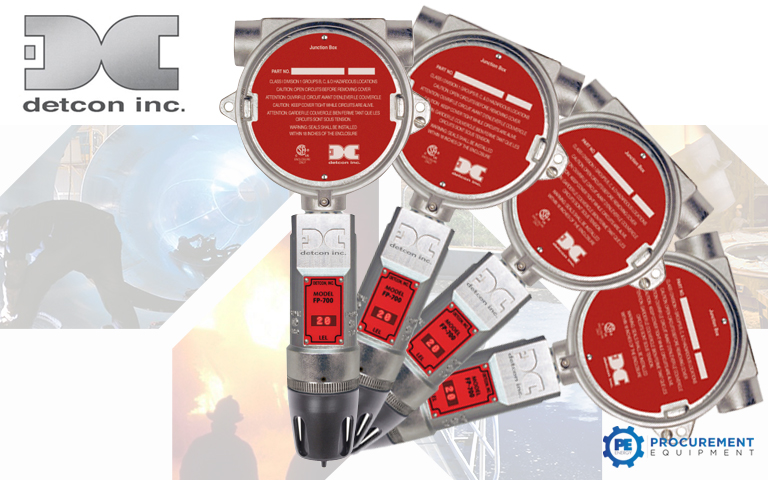
In industrial environments, the gases you can’t see are the ones that kill.
Hydrogen sulfide at 100 ppm can cause death within minutes. Carbon monoxide is odorless and cumulative. Combustible gases at the right concentration turn entire facilities into bombs waiting for a spark.
Your gas detection system is the only thing standing between normal operations and catastrophe. And if that system fails—due to corrosion, vibration, temperature extremes, or sensor drift—you won’t get a second chance.
Why Standard Gas Detectors Fail in Harsh Industrial Environments
Most gas detectors are designed for controlled environments. They work fine in climate-controlled buildings with stable temperatures and minimal vibration.
But industrial sites aren’t controlled environments. They’re hostile:
Temperature extremes. Desert installations see 120°F days and freezing nights. Arctic operations run at -40°F. Standard sensors drift, fail, or give false readings outside narrow temperature bands.
Corrosive atmospheres. Salt air, chemical vapors, and hydrogen sulfide attack electronics. Water ingress destroys circuitry. Conventional housings corrode and fail.
Vibration and shock. Pumps, compressors, and heavy equipment create constant vibration. Solder joints crack. Sensors lose calibration. Connections work loose.
Remote locations. Offshore platforms, pipeline stations, and remote wells can’t afford frequent maintenance visits. Sensors that need monthly calibration or annual replacement create operational nightmares.
How the Model 700 Gas Detector Solves These Problems
The Model 700 intelligent sensor module was engineered specifically for harsh and extreme locations. Every design decision addresses real-world failure modes that plague conventional detectors.
Environmentally Bulletproof Gas Detector Construction
The Model 700 uses electropolished 316 stainless steel housing—the same material grade used in pharmaceutical and marine applications. Combined with 100% encapsulated circuitry, there’s no path for water, corrosive gases, or contamination to reach sensitive electronics.
Gold-plated mating pins eliminate contact corrosion. Bullet-proof I/O protection handles over-voltage events, miswiring, and EMI/RFI interference that would destroy lesser instruments.
Multiple Gas Sensor Technologies in One Platform
The Model 700 supports multiple sensor technologies for different gas detection applications:
H2S Gas Detection: CHEMFET and Electrochemical Sensors
For hydrogen sulfide detection, choose CHEMFET MOS solid-state technology with a 10-year sensor warranty for extreme environments, or electrochemical sensors for quick response and low power consumption. For comprehensive flame and gas detection solutions, the Model 700 integrates seamlessly with complete safety systems.
Combustible Gas Detection: Catalytic and Infrared LEL Sensors
Catalytic bead sensors provide non-selective combustible gas detection with rugged construction. Infrared sensors offer 5-year warranty coverage for hydrocarbon detection without oxygen dependency or catalyst poisoning concerns.
Toxic Gas and Oxygen Monitoring
Electrochemical sensors detect carbon monoxide, ammonia, chlorine, and other toxic gases with quick response times. Photo ionization detectors (PID) provide universal VOC detection. Oxygen sensors feature embedded temperature compensation with 2-year warranty.
Modular Plug-and-Play Gas Sensor Design
Unlike fixed-sensor detectors that require complete unit replacement when sensors fail, the Model 700 uses plug-in replaceable sensor modules. Quick-thread release allows field sensor replacement without special tools or hot work permits.
The universal design concept means minimal spare parts inventory. One spare sensor module can service multiple detector installations.
Model 700 Gas Detector Output and Integration
The Model 700 provides dual redundant outputs for safety system integration:
4-20 mA analog signal: Linear output compatible with any PLC, DCS, or safety controller. Industry standard for gas detection systems.
Modbus RS-485 serial: Digital output for advanced monitoring, diagnostics, and remote configuration. Enables predictive maintenance and sensor health monitoring.
As a component of a SIL-rated system, the Model 700’s Safe Failure Fraction (SFF) meets requirements for SIL 2 rated safety systems—critical for applications where gas detection is part of emergency shutdown logic.
Industrial Gas Detector Applications
The Model 700 is deployed across industries where gas hazards meet harsh environments:
Oil and Gas H2S and LEL Detection
Upstream production, midstream pipelines, and downstream refineries face constant H2S and combustible gas exposure. The Model 700’s corrosion-resistant construction handles sour gas environments where conventional detectors fail within months. Learn more about oil and gas safety with advanced flame detectors.
Chemical Plant Toxic Gas Monitoring
Chemical manufacturing requires detection of specific toxic gases—ammonia, chlorine, HCl, SO2. The Model 700’s modular design allows mixing sensor types across a facility based on local hazards.
Confined Space Gas Detection
Tanks, vessels, and enclosed spaces require monitoring for oxygen deficiency, toxic gases, and combustible atmospheres before and during entry. The scrolling LED display provides clear readings visible through viewing ports. For area monitoring, pair with flame detection systems for complete hazard coverage.
Model 700 Gas Detector Specifications Summary
Power: 11.5 – 28 VDC
Output: 4-20 mA analog + Modbus RS-485
Housing: Electropolished 316 Stainless Steel
Connection: 3/4″ NPT Thread
Certifications: SIL 2 capable
Review the complete Model 700 industrial gas detector technical specifications and sensor options below.
Model 700
Industrial Gas Detection Sensor
Intelligent sensor modules for harsh and extreme locations
Environmentally Bulletproof
- • Electropolished 316SS Construction
- • 100% Encapsulated Circuitry
- • Water/Corrosion/Vibration Resistant
- • Gold Plated Mating Pins
Modular & Serviceable
- • Plug and Play Components
- • Quick Thread Release
- • Minimal Spare Parts
- • Integral Calibration Port
Failsafe Interface
- • Dual Redundant Outputs
- • 4-20mA + Modbus RS-485
- • SIL 2 System Compatible
- • LED Display
Sensor Technologies
Hydrogen Sulfide (H2S)
CHEMFET MOS Solid State
10-year warranty • Wide temp range • Harsh locations
Electrochemical
Quick response • Low power • Stable calibration
Combustible Gas (LEL)
Catalytic Bead
Non-selective • 3-5 year life • Rugged
Infrared
5-year warranty • Hydrocarbon specific • Plug-in
Toxic Gases
Electrochemical
CO, NH3, Cl2, HCl, SO2 • Quick response
Photo Ionization (PID)
Universal VOC • Non-selective • Plug-in
Oxygen & CO2
O2 Electrochemical
2-year warranty • Temp compensated
CO2 Infrared
5-year warranty • Plug-in optical
General Specifications
Anatomy of Model 700
Junction Box
RS-485 Modbus, Surge Protection
LED Display
Scrolling readout, status, user interface
Plug-in Sensors
Catalytic, IR, Solid State, Electrochemical
316SS Housing
Threaded quick release, corrosion resistant
Magnetic Programming
Non-intrusive handheld magnet interface
Encapsulated Circuitry
Eliminates water, corrosion, vibration failures