
Right now, at this very moment, there’s a silent killer stalking your remote well sites. It doesn’t make noise. It doesn’t send warning signals. And by the time you notice it’s there, it’s already cost you thousands in lost production, environmental violations, and emergency repairs.
I’m talking about chemical injection pump failures at remote locations where traditional power sources either don’t exist, are unreliable, or—in the case of pneumatic systems—are literally bleeding your natural gas reserves into the atmosphere 24/7.
The numbers don’t lie: pneumatic chemical injection pumps consume between 40-60 standard cubic feet of natural gas per day, every single day. Multiply that across your fleet, and you’re watching profit margins evaporate into thin air while regulatory agencies circle like vultures, waiting to pounce on emissions violations.
The Hidden Cost Of “Cheap” Solutions That Aren’t So Cheap
Here’s what nobody talks about when they sell you traditional chemical injection systems: the real cost isn’t the upfront purchase price. It’s what happens after you install them.
Let’s do some uncomfortable math. That pneumatic pump consuming 50 SCF of natural gas daily? At today’s prices, that’s roughly $75-100 per month in consumed gas—per pump. But that’s just the beginning of your financial bleeding.
Add in the service calls when the system fails (and it will fail). Remote locations mean higher service costs, longer downtime, and production losses that can hit five figures before you even know there’s a problem.
Then there’s the regulatory nightmare. With emissions standards tightening every year, those “reliable” pneumatic pumps are becoming compliance liabilities. One surprise EPA inspection finding excessive emissions, and you’re looking at fines that make your equipment costs look like pocket change.
“But we’ve always done it this way.” Famous last words of operations managers who watched their budgets get demolished by “proven” technology that’s actually bleeding them dry.
And here’s the kicker: while you’re dealing with all these headaches, your competition is quietly installing systems that eliminate these problems entirely. They’re reducing operating costs, improving reliability, and sleeping better at night knowing their chemical injection systems are working flawlessly—without consuming a single cubic foot of your valuable natural gas.
The Solar-Powered Game Changer That’s Revolutionizing Chemical Injection
What if I told you there’s a proven chemical injection solution that operates for years without consuming any natural gas, requires minimal maintenance, and actually improves reliability while cutting your operating costs?
You’d probably think I was selling snake oil. But the engineers at TEXSTEAM have cracked the code with their revolutionary solar-powered chemical injection pumping systems—and the results are nothing short of remarkable.
The TEXSTEAM iCIP, HiCIP, and SolarLite systems deliver zero-emission operation with the kind of reliability that makes maintenance managers look like heroes. We’re talking about systems engineered to run continuously for up to 4 days without sunlight, powered by intelligent battery management that’s been tested in the harshest conditions imaginable.
Why This Isn’t Just Another “Green” Gadget (It’s A Profit Machine)
Let’s cut through the environmental marketing fluff and talk about what really matters: how this technology makes you money while solving your operational headaches.
At the heart of these systems is the proven TEXSTEAM 2200 series pump—the same eccentric cam technology that’s been delivering reliable performance in industrial applications for decades. But here’s where it gets interesting: they’ve wrapped this proven pump technology in intelligent control systems that would make NASA engineers jealous.
The microprocessor-based programmable controller doesn’t just run your pump—it optimizes performance continuously. When system pressure fluctuates (and it always does), the high-torque brushless DC motor maintains constant speed automatically. No manual adjustments. No service calls. No production interruptions.
Speaking of interruptions, these systems are sized with enough battery capacity to operate for 4 full days without sunlight. Think about that: even during extended cloudy periods or severe weather, your chemical injection continues uninterrupted while pneumatic systems might fail due to gas supply issues or freezing conditions.
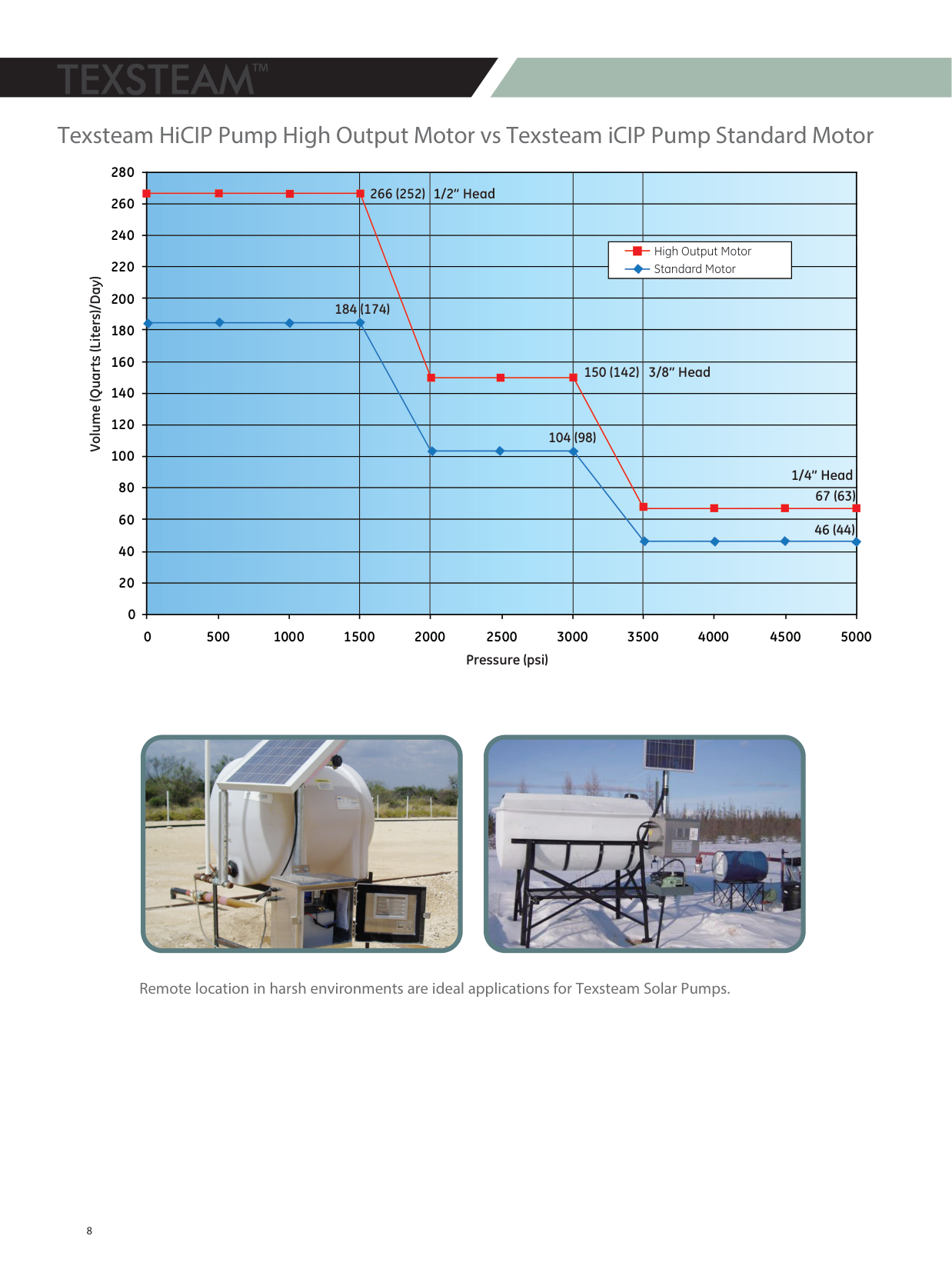
The volume capabilities will surprise you. The iCIP handles anywhere from 1.75 to 552.87 quarts per day depending on configuration, with pressures up to 7,000 psi. The HiCIP kicks it up another notch with 44% more volume per head—delivering up to 798.6 quarts per day with the 1/2″ triplex configuration.
But raw performance numbers only tell part of the story. The real magic happens in the details that separate professional-grade equipment from industrial toys.
Take the chemical compatibility features. The new SDP packing technology handles the aggressive chemicals that destroy lesser pumps, with material options including Buna-N, Viton, and Teflon. The 316 stainless steel heads come standard—not as an expensive upgrade—because TEXSTEAM knows that corrosion failures in remote locations aren’t just inconvenient, they’re catastrophic.
The Intelligence That Pays For Itself
Here’s where these systems leave traditional pumps in the dust: they’re smart enough to prevent problems before they become expensive disasters.
The fault management system includes low battery shutdown, motor overload protection, and comprehensive fuse protection. But it goes deeper than basic protection—the system actively monitors performance and can communicate issues before they cause downtime.
Depending on which series you choose, you get progressively more intelligence:
Series 100 (Basic): Programmable controller with real-time monitoring. Set your flow rate in quarts per day or liters per day, and the system maintains it automatically. The 5-position joystick and 4-digit LED display make operation intuitive even for technicians who aren’t engineers.
Series 200 (Data Logging): Everything from Series 100, plus comprehensive data logging. Monitor, store, and download pump and well data directly to Excel worksheets. This isn’t just nice to have—it’s your proof of compliance when regulators come calling.
Series 300 (Communications): Adds remote monitoring capabilities via Modbus or SCADA integration. Suddenly, your remote locations aren’t so remote anymore. You can monitor performance, adjust settings, and troubleshoot issues from your office instead of driving hours to check on systems.
Series 400 (Full Capability): The complete package combining all the features of the previous series. For critical applications where downtime isn’t an option, this level of intelligence and monitoring capability can prevent a single failure that would pay for the entire system.
When Simple Is Smarter: The SolarLite Solution
Not every application needs NASA-level intelligence. Sometimes you just need bulletproof reliability at an economical price point. That’s exactly what the TEXSTEAM SolarLite delivers.
The SolarLite strips away the advanced monitoring and communication features while retaining the core reliability that makes these systems superior to pneumatic alternatives. One dial controls variable speed and flow rate. Three indicator lights tell you everything you need to know: Power, Motor Run/Stop, and Fault status.
Don’t mistake simplicity for weakness. This system still delivers up to 5,999 psi pressure capability and maintains the same chemical compatibility and weather resistance as its more sophisticated siblings. The lockable battery enclosure and CSA/UL certifications (Class I Division II Groups C & D) ensure it meets the same safety standards required for hazardous locations.
Real-World Applications Where These Systems Dominate
The beauty of solar-powered chemical injection systems isn’t just their technical sophistication—it’s their versatility across applications where traditional solutions fail or become prohibitively expensive.
Remote well sites are the obvious application, but smart operators are discovering these systems excel anywhere reliable chemical injection is critical. Pipeline applications, offshore platforms, and even facilities with grid power are installing solar systems as primary or backup solutions.
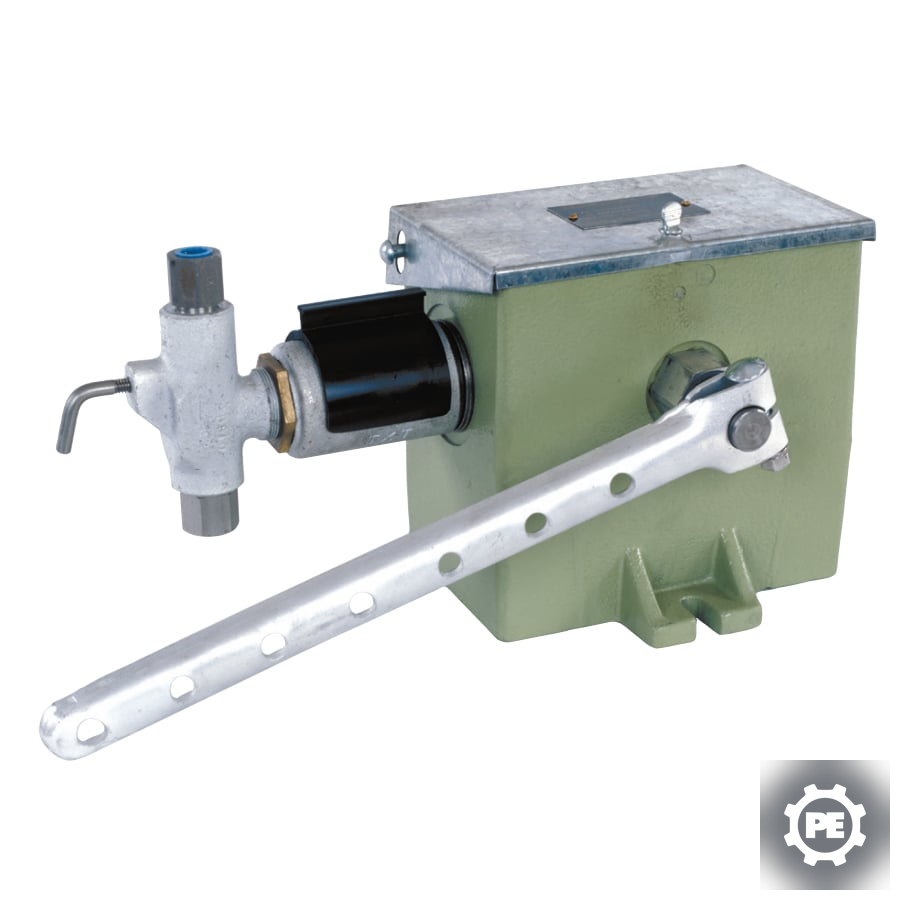
Why would you choose solar power when grid electricity is available? Simple: redundancy and cost reduction. While others rely on Electric Pumps Catalog | PE-Energy Industrial Supp, solar systems eliminate electric utility costs entirely while providing backup capability during power outages.
For operations transitioning from gas-powered pneumatic systems, the upgrade path is straightforward. The Texsteam Series 1200 Gas/Pneumatic Pump might seem familiar, but operators quickly discover that eliminating gas consumption and emissions compliance issues makes solar the smart long-term choice.
The installation flexibility adds another layer of value. While traditional electric pumps like the Texsteam Series 2400 Electric Pump or Texsteam Series 2500 Electric Pump require electrical infrastructure, solar systems can be deployed virtually anywhere with adequate sun exposure.
The Certification That Matters (And Why Your Insurance Company Will Love This)
In hazardous industrial environments, certifications aren’t marketing fluff—they’re your legal protection and operational insurance policy. The TEXSTEAM solar systems carry both CSA (Canada) and UL (USA) certifications for Class I Division II Groups C & D locations.
What does this mean in practical terms? These systems are certified safe for installation in locations where flammable gases or vapors might be present under abnormal conditions. This covers virtually every oil and gas application where chemical injection is required.
The NEMA 3R weather-resistant battery enclosure ensures reliable operation in harsh outdoor environments while meeting safety requirements for electrical equipment in industrial locations. This isn’t just about meeting minimum standards—it’s about installing systems that inspectors approve and insurance companies don’t penalize you for using.
Options And Accessories That Solve Real Problems
The base systems are comprehensive, but TEXSTEAM understands that real-world applications often require additional capabilities. The available options aren’t just add-on features—they’re solutions to specific operational challenges.
Power options include 110 AC to 12 VDC converters and 24 VDC to 12 VDC converters for applications where backup power sources are available. There’s even an Intelligent Electric CIP option that eliminates solar panels and batteries entirely for indoor or covered installations.
The monitoring and I/O options transform these pumps into comprehensive well monitoring systems. Temperature probes, ultrasonic tank level monitors, pressure transducers, flow meters, and H2S sensors can all integrate into the system. Instead of installing separate monitoring equipment, you get comprehensive data collection from a single integrated system.
For high-security applications, lockout key switches and on/off switches provide physical access control. The analog and digital I/O capabilities allow integration with external condition monitoring and control systems, making these pumps components in larger automated systems rather than standalone equipment.
Why The 24-Month Warranty Tells You Everything
Most industrial equipment comes with 12-month warranties because manufacturers know their products will likely need service or replacement within that timeframe. TEXSTEAM offers a 24-month system warranty because they’ve engineered these systems to operate reliably for years with minimal intervention.
This isn’t just marketing confidence—it’s financial proof that these systems are built to professional standards. The warranty covers the complete system: pump, motor, controller, and solar components. When you’re installing equipment in remote locations where service calls are expensive and downtime is costly, this level of warranty coverage isn’t just reassuring—it’s essential financial protection.
Consider what this means for your total cost of ownership calculations. While competitors might offer lower upfront prices, they’re often betting you’ll need replacement parts, service calls, or complete system replacement within the first few years. TEXSTEAM’s warranty terms suggest they’re betting their systems will outlast and outperform the competition.
The Smart Money Move (Before Your Competition Figures This Out)
Here’s what separates industry leaders from companies that struggle with ever-increasing operational costs: leaders recognize game-changing technology early and implement it systematically across their operations.
Solar-powered chemical injection isn’t experimental technology anymore. It’s proven, certified, warrantied equipment that’s solving real problems for smart operators who refuse to accept the status quo of gas-consuming, high-maintenance, compliance-risky alternatives.
The question isn’t whether solar chemical injection systems will eventually replace pneumatic pumps in remote applications. The question is whether you’ll be an early adopter who benefits from reduced operating costs and improved reliability, or whether you’ll wait until your competition has already gained the operational advantages.
Every day you delay implementing zero-emission chemical injection is another day of consuming valuable natural gas, risking compliance violations, and dealing with the reliability issues that make remote operations expensive and unpredictable.
The TEXSTEAM solar systems aren’t just equipment purchases—they’re strategic investments in operational efficiency, regulatory compliance, and long-term cost reduction. With systems sized for 4-day autonomous operation, comprehensive monitoring capabilities, and the kind of reliability that makes maintenance managers look brilliant, these systems deliver the kind of performance that transforms problem locations into profit centers.
The technology is proven. The certifications are in place. The warranty coverage provides financial protection. The only remaining question is how quickly you want to start eliminating the hidden costs that are bleeding your operations dry while improving the reliability that keeps production flowing smoothly.
Smart operators don’t wait for perfect conditions. They recognize superior technology when they see it and implement it systematically to gain competitive advantages. The TEXSTEAM solar chemical injection systems represent exactly this kind of opportunity—available now, proven effective, and ready to start delivering results immediately.
Solar Solution Pumps
iCIP • HiCIP • SolarLite — Zero-Emissions Chemical Injection
Texsteam solar-powered chemical injection pumping systems deliver years of reliable, low-maintenance operation for oil and gas production facilities, pipelines, and remote well sites — no onsite power source required.
- Zero emissions, quiet operation
- Eliminates lost and consumed natural gas vs. pneumatic pumps
- Sized for 4 days run time without sun
- CSA (Canada) and UL (USA) certified — Class I Division II Groups C & D
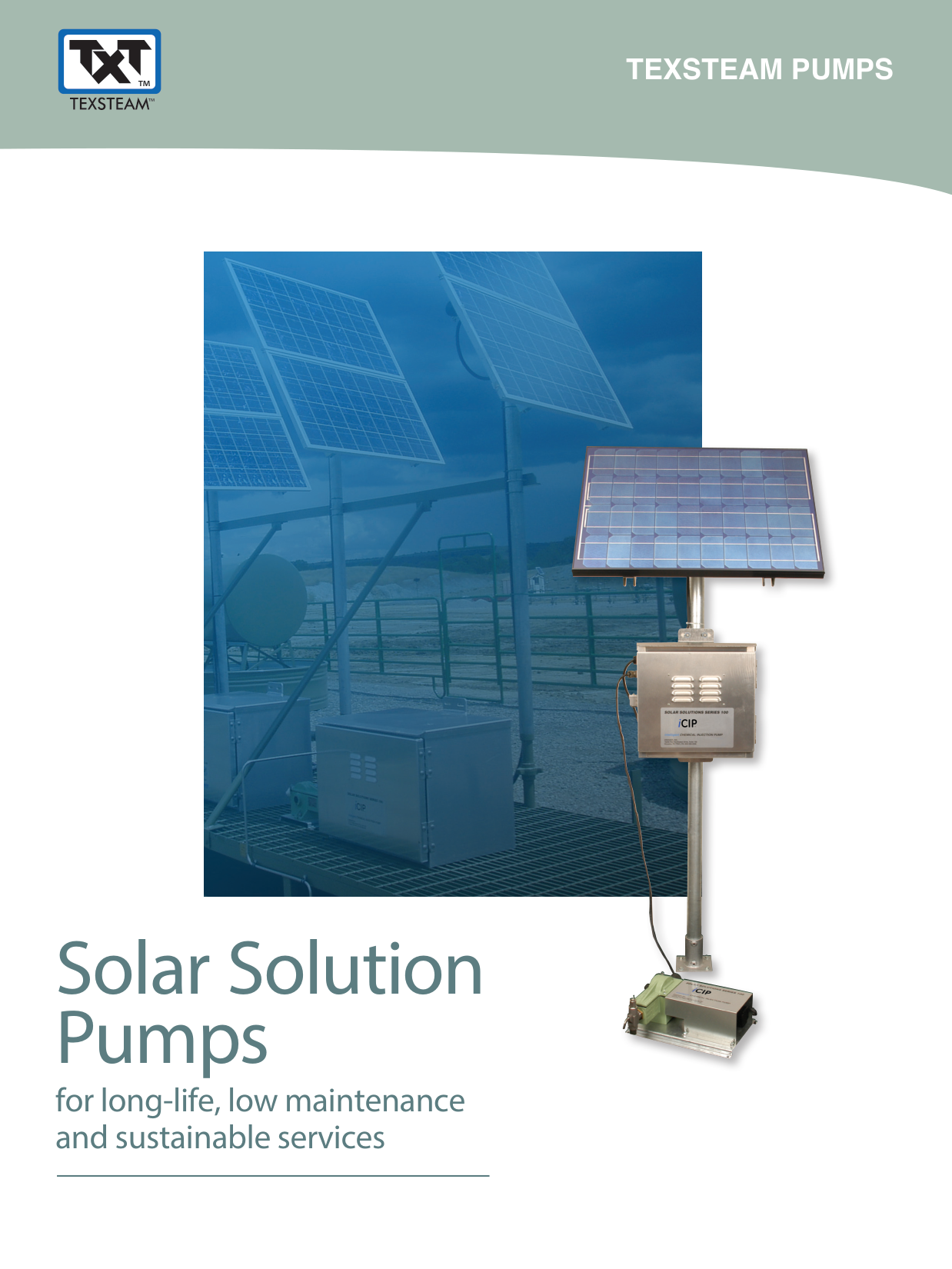
TEXSTEAM iCIP — THREE CONFIGURATIONS
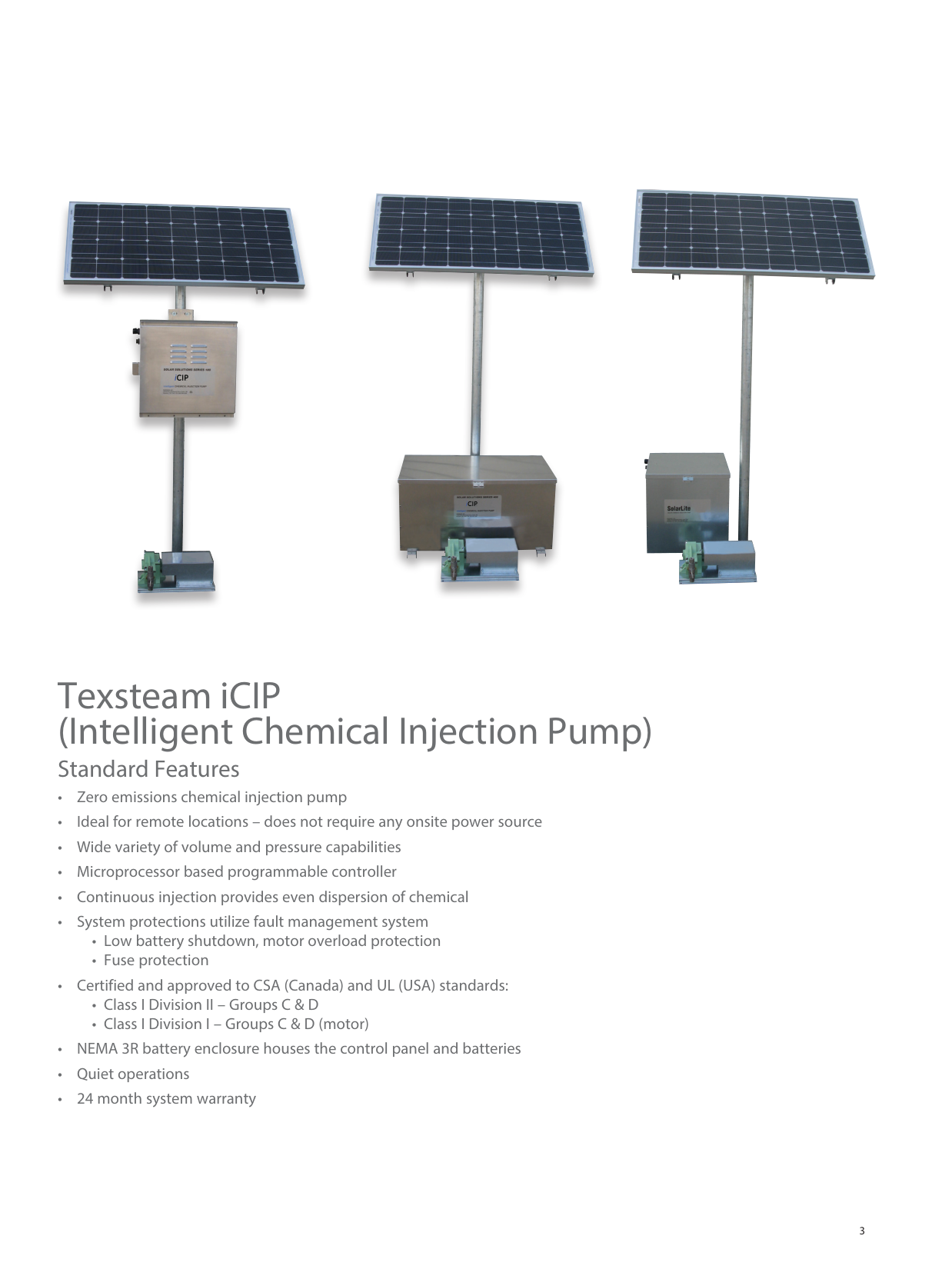
1. TEXSTEAM iCIP STANDARD FEATURES
Pump Design
- Proven 2200 series pump — eccentric cam, permanently lubricated bearings
- 316 SS heads standard — 3/16″, 1/4″, 3/8″, 1/2″ sizes
- Simplex, duplex, or triplex configurations
- Stroke adjustment option available
- New SDP packing technology for chemical compatibility
- Buna-N, Viton, Teflon packing materials
Motor & Controller
- Brushless DC gear motor — continuous duty variable speed
- High efficiency, low amperage draw — maximizes battery life
- High torque response — speed stays constant as pressure fluctuates
- Microprocessor-based programmable controller
- 5-position joystick + 4-digit LED display
- Modbus RS485/RS232 communication jack
- NEMA 3R weather-resistant battery enclosure
- Fault management: low battery shutdown, motor overload protection, fuse protection
- 24-month system warranty
2. iCIP MODEL SERIES
| Model | Key Features |
|---|---|
| Series 100 — Basic | Programmable controller, set flow in quarts/day or liters/day, real-time monitoring on-site |
| Series 200 — Data Logging | Series 100 features + data logging; monitor, store, and download pump/well data to Excel worksheet |
| Series 300 — Communications | Series 100 features + remote monitoring via Modbus® or SCADA; reduces site visits |
| Series 400 — Full | Full capabilities of Series 100 + 200 + 300 combined |
3. iCIP VOLUME & PRESSURE SPECIFICATIONS (Standard Motor — 5 to 45 RPM)
| Head Size | Heads | Min Vol. Qt (L)/Day | Max Vol. Qt (L)/Day | Std Pressure (psi) | High Pressure (psi) |
|---|---|---|---|---|---|
| 3/16″ | Single | 1.75 (1.66) | 26.31 (24.87) | 0–5000 | 5000–7000 |
| Duplex | 1.75 (1.66) | 52.62 (49.79) | 0–5000 | 5000–7000 | |
| Triplex | 1.75 (1.66) | 73.93 (74.69) | 0–5000 | 5000–7000 | |
| 1/4″ | Single | 3.07 (2.91) | 46.07 (43.61) | 0–5000 | 0–5000 |
| Duplex | 3.07 (2.91) | 92.14 (87.19) | 0–5000 | 0–5000 | |
| Triplex | 3.07 (2.91) | 138.21 (130.79) | 0–5000 | 0–5000 | |
| 3/8″ | Single | 11.52 (10.90) | 103.68 (98.12) | 0–1500 | 1500–3000 |
| Duplex | 11.52 (10.90) | 207.36 (196.23) | 0–1500 | 0–1500 | |
| Triplex | 11.52 (10.92) | 311.04 (295.35) | 0–1500 | 0–1500 | |
| 1/2″ | Single | 20.48 (19.38) | 184.29 (174.43) | 0–1000 | 0–1000 |
| Duplex | 20.48 (19.38) | 368.58 (348.80) | 0–1000 | 0–1000 | |
| Triplex | 20.48 (19.38) | 552.87 (523.10) | 0–500 | 0–500 |
4. TEXSTEAM HiCIP — HIGH OUTPUT MOTOR (5 to 65 RPM)
The HiCIP combines iCIP intelligence with 44% more volume per head — doing the work of 2–3 lower-volume pumps to reduce cost of ownership.
- 65 RPM motor — 44% more volume per head than iCIP
- Variable speed continuous-duty brushless motor
- Available in Series 100, 200, 300, and 400
- Duplex and triplex configurations for high-volume needs
- Max capacity: 798.6 qt/day (199.65 GPD) with 1/2″ triplex
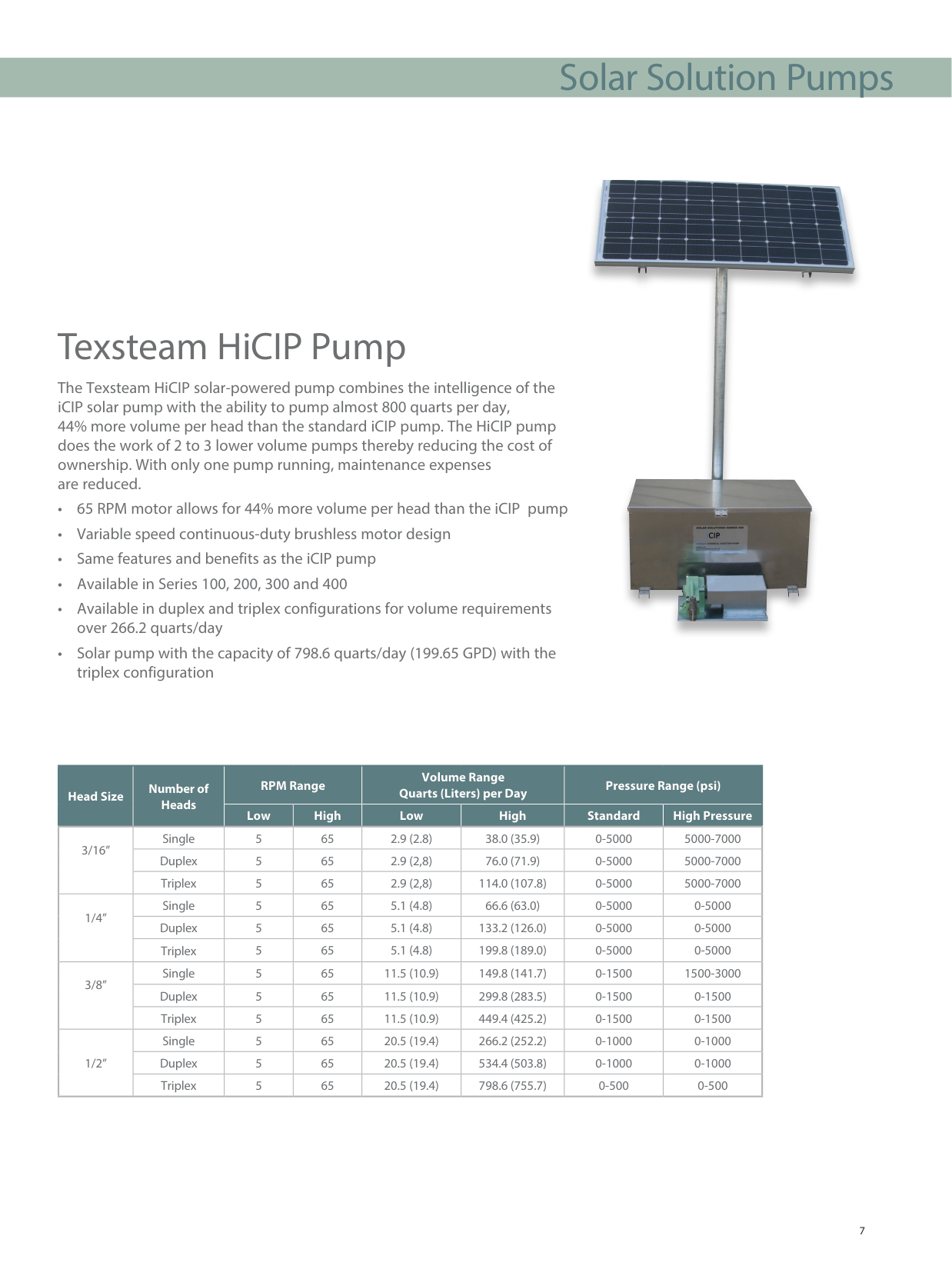
| Head Size | Heads | Min Vol. Qt (L)/Day | Max Vol. Qt (L)/Day | Std Pressure (psi) | High Pressure (psi) |
|---|---|---|---|---|---|
| 3/16″ | Single | 2.9 (2.8) | 38.0 (35.9) | 0–5000 | 5000–7000 |
| Duplex | 2.9 (2.8) | 76.0 (71.9) | 0–5000 | 5000–7000 | |
| Triplex | 2.9 (2.8) | 114.0 (107.8) | 0–5000 | 5000–7000 | |
| 1/4″ | Single | 5.1 (4.8) | 66.6 (63.0) | 0–5000 | 0–5000 |
| Duplex | 5.1 (4.8) | 133.2 (126.0) | 0–5000 | 0–5000 | |
| Triplex | 5.1 (4.8) | 199.8 (189.0) | 0–5000 | 0–5000 | |
| 3/8″ | Single | 11.5 (10.9) | 149.8 (141.7) | 0–1500 | 1500–3000 |
| Duplex | 11.5 (10.9) | 299.8 (283.5) | 0–1500 | 0–1500 | |
| Triplex | 11.5 (10.9) | 449.4 (425.2) | 0–1500 | 0–1500 | |
| 1/2″ | Single | 20.5 (19.4) | 266.2 (252.2) | 0–1000 | 0–1000 |
| Duplex | 20.5 (19.4) | 534.4 (503.8) | 0–1000 | 0–1000 | |
| Triplex | 20.5 (19.4) | 798.6 (755.7) | 0–500 | 0–500 |
5. TEXSTEAM SolarLite — ECONOMICAL MODEL
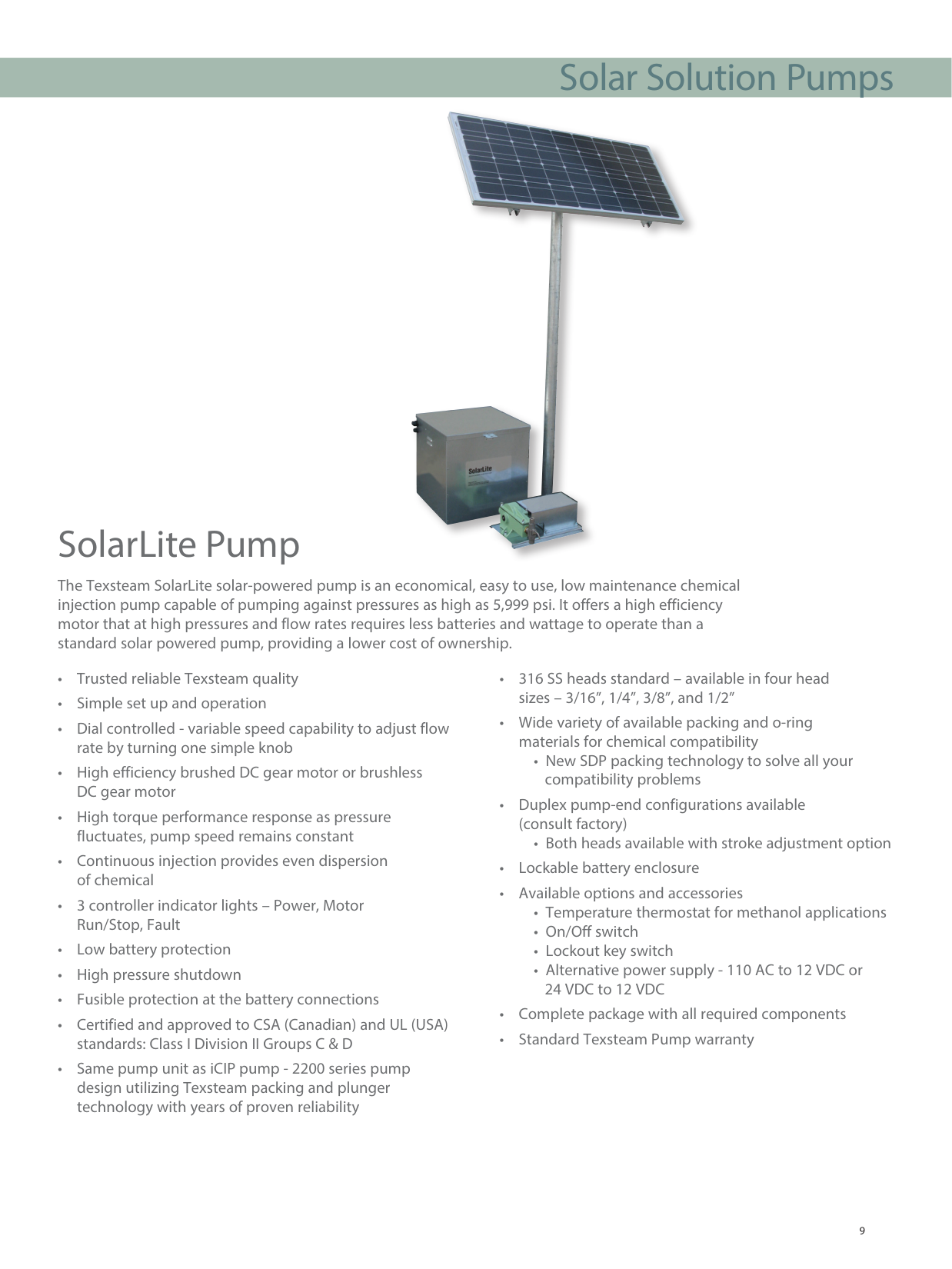
Simple, low-maintenance solar pump rated to 5,999 psi. Dial-controlled variable speed — turn one knob to adjust flow rate.
- Dial controlled — single knob for variable speed/flow
- High efficiency brushed or brushless DC gear motor
- 3 indicator lights: Power, Motor Run/Stop, Fault
- Low battery protection + high pressure shutdown
- Lockable battery enclosure
- CSA and UL certified: Class I Division II Groups C & D
- Options: temperature thermostat, on/off switch, lockout key switch, 110 AC or 24 VDC alternate power
| Head Size | Heads | Min Vol. Qt (L)/Day | Max Vol. Qt (L)/Day | Pressure Range (psi) |
|---|---|---|---|---|
| 3/16″ | Single | 2.92 (2.76) | 26.31 (24.89) | 0–5000 |
| Duplex | 2.92 (2.76) | 52.62 (49.79) | 0–5000 | |
| 1/4″ | Single | 5.12 (4.84) | 46.07 (43.61) | 0–3000 |
| Duplex | 5.12 (4.84) | 92.14 (87.19) | 0–3000 | |
| 3/8″ | Single | 11.52 (10.9) | 103.68 (98.12) | 0–1000 |
| Duplex | 11.52 (10.9) | 207.36 (196.23) | 0–1000 | |
| 1/2″ | Single | 20.48 (19.38) | 184.29 (174.43) | 0–500 |
| Duplex | 20.48 (19.38) | 368.58 (348.80) | 0–500 |
6. iCIP AVAILABLE OPTIONS & ACCESSORIES
Power Options
- Standard solar panels + battery
- 110 AC to 12 VDC converter
- 24 VDC to 12 VDC converter
- Intelligent Electric CIP (no panels/batteries)
Monitoring & I/O
- Temperature probe
- Ultrasonic tank level monitor
- Pressure transducer
- Flow meter
- H2S sensor
- Lockout key switch / On/Off switch
- Analog and digital I/O for external conditions
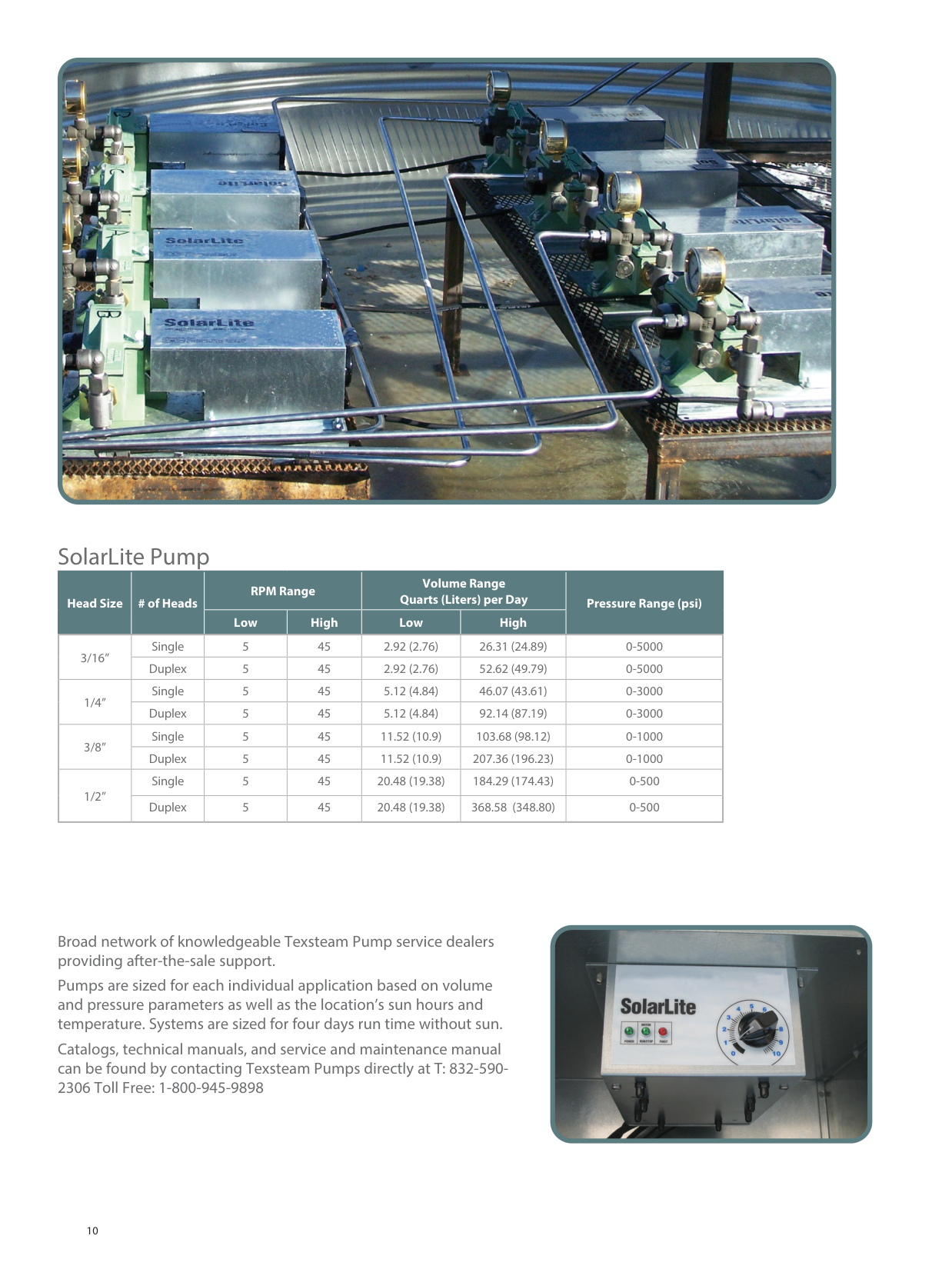
Remote location in harsh environments are ideal applications for Texsteam Solar Pumps. Systems are sized for 4 days run time without sun.