Here’s something most well contractors learn the hard way: chemical treatments alone don’t cut it when your well casing is crusted with biofouling deposits.
The numbers tell the story. Up to 95% of debris from slime bacteria and iron bacteria accumulates on the inside of well casings, screens, and bore holes. Another 30-50% of mineral deposits cling to those same surfaces. You can pour all the chemistry you want down that hole—if you haven’t mechanically removed the buildup first, you’re wasting product and time.
Why Wire Brushing Changes Everything
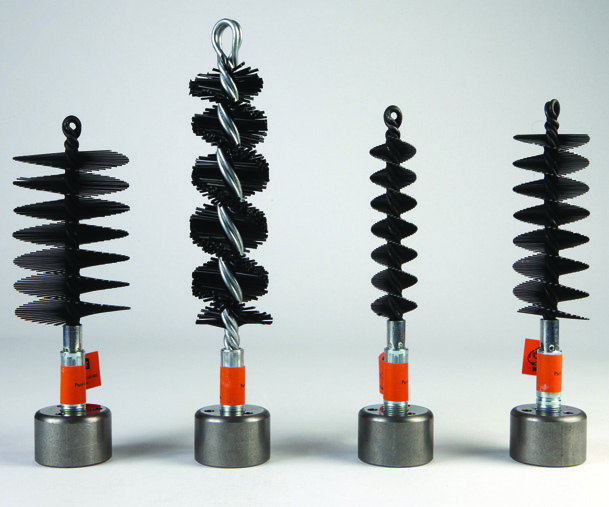
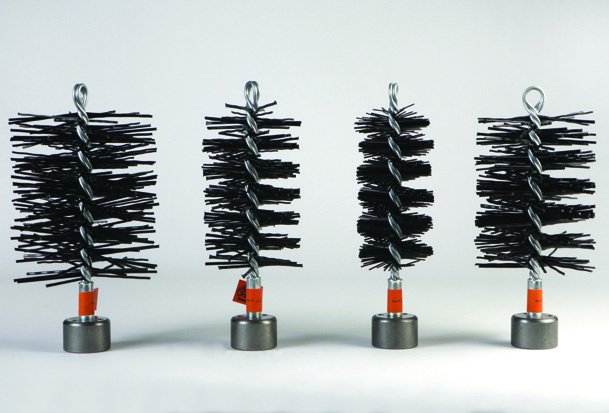
The Jet-Lube WireHog brush system gives you mechanical cleaning capability from 2″ to 10″ diameter casings. Each brush features a 1.25″ female coupling with FIP threads—plus three strategically drilled air holes that let you airlift debris without tripping out of the well.
That’s a detail worth noting. Traditional brush systems force you to choose: brush now, airlift later. The WireHog design lets you do both simultaneously when conditions allow. For the complete Jet-Lube product line, you’ll find this attention to practical field use runs through their entire catalog.
Steel vs. Poly: Choosing the Right WireHog Brush
Material selection isn’t optional—it’s critical. Get this wrong and you’ll either damage your casing or wear out brushes at an unacceptable rate.
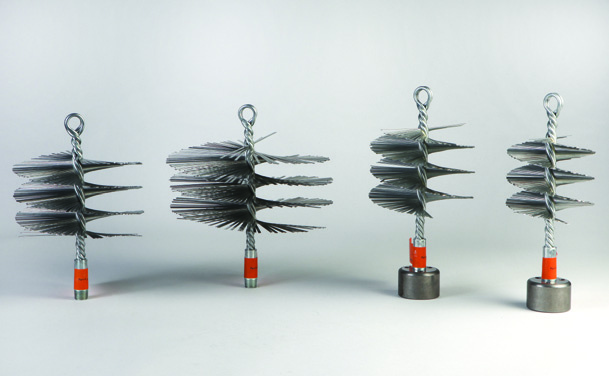
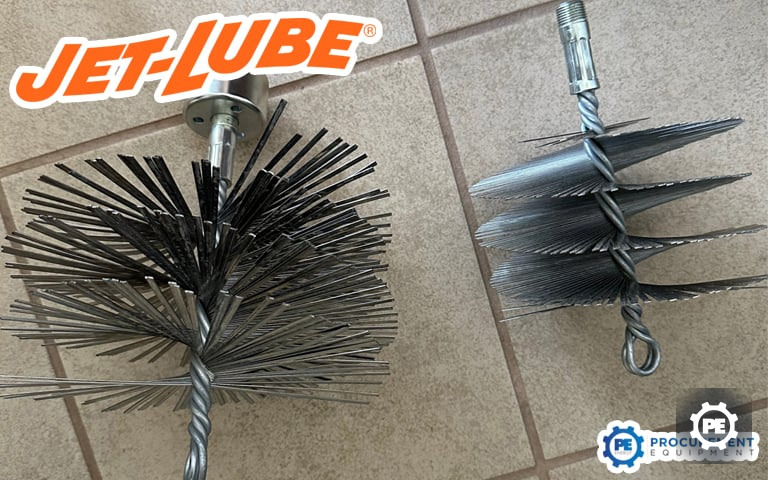
Steel Brushes: Use exclusively for steel casing and screen. The aggressive bristles cut through heavy deposits but will etch PVC—permanently damaging plastic casings.
Poly Brushes: Required for PVC casing and screen. Can be used on steel pipe in a pinch, but expect accelerated brush wear. For PVC applications, poly is your only choice.
The 8″ Steel Assembly WireHog Casing Brush represents the workhorse of the lineup—sized for the most common commercial and municipal well installations.
The Proper Brushing Technique
Connect your WireHog brush fitting to 1.25″ steel pipe for weight. Work in 20-foot increments, brushing up and down to the bottom of the well. Here’s where it gets efficient: you can brush and airlift simultaneously if needed.
At the bottom, connect your surface pipe to the air compressor and blow debris clear. If submergence won’t support airlifting, bail from the bottom. Then—and only then—apply your Unicid chemistry to attack iron bacteria and mineral deposits. The chemistry works faster, penetrates deeper, and you use less product.
2″ Diameter Brushes: Different Setup Required
The 2″ WireHog brushes use a 3/8″ male MIP fitting instead of the standard 1.25″ coupling. Attach a 3/8″ coupling to this fitting. Want airlifting capability? Drill 4-5 small diameter holes around the middle of the coupling, then adapt to whatever diameter steel pipe you’re using for the brush string.
For thread sealing on these connections, consider using Jet-Lube TF-25 thread compound to ensure leak-free joints throughout your brush assembly.
Review the complete WireHog brush specifications below for sizing details and diameter matching guidelines.
Brushes for well casing & pipe cleaning
In wells, as much as 95% of debris created by biofouling (slime bacteria/iron bacteria) and 30-50% of mineral deposits may be on the inside of the well casing, screen or open bore hole. Wire brushing and removal of this debris will allow chemistry to more easily move into the aquifer, require less chemistry, and reduce the length on the job site significantly.
| Brush Diameters | Well Casing, Pipe or Screen Diameters |
|---|---|
| 2″ diameter | 2″ ID casing & 2″ PS screen |
| 3″ diameter | 3″ ID casing, 3″ PS screen, 4″ telescope Screen |
| 4″ diameter | 4″ ID casing, 4″ PS screen, & 5″ telescope Screen |
| 5″ diameter | 5″ ID casing, 5″ PS screen, & 6″ telescope Screen |
| 6″ diameter | 6″ ID casing, 6″ PS screen, & 8″ telescope screen |
| 8″ diameter | 8″ ID casing, 8″ PS screen, & 10″ telescope screen |
| 10″ diameter | 10″ ID casing, 10″ PS screen, 12″ telescope screen |
Additional sizes are available by special order
3-10″ DIAMETER BRUSHES
All have a 1.25″ female coupling with FIP threads. Three air holes drilled in the fitting allow you to airlift debris without tripping out of the well. Use poly brushes for PVC casing and screen. Poly brushes can be used in steel pipe but will wear the brush. Use steel brushes for steel casing and screen. Do NOT use steel brushes in PVC as will etch the casing.
Connect the fitting to 1.25″ steel pipe for weight. Brush up/down in 20′ increments to the bottom of the well. You can brush and airlift simultaneously, if needed. At the bottom of the well, connect the pipe at the surface to your air-compressor and blow debris out of the well. If not enough submergence for airlifting, bail debris from the bottom of the well. Use the Unicid chemistry for cleaning the well to remove iron bacteria or mineral deposits.
2″ DIAMETER BRUSHES
These brushes have a 3/8″ male, MIP fitting. Attach a 3/8″ coupling to this fitting. If you want to airlift debris, drill 4-5 small diameter holes around the middle of the coupling. Adapt and connect to whatever diameter of steel pipe used for brushing. Airlift debris out of the well prior to chemical cleaning.